
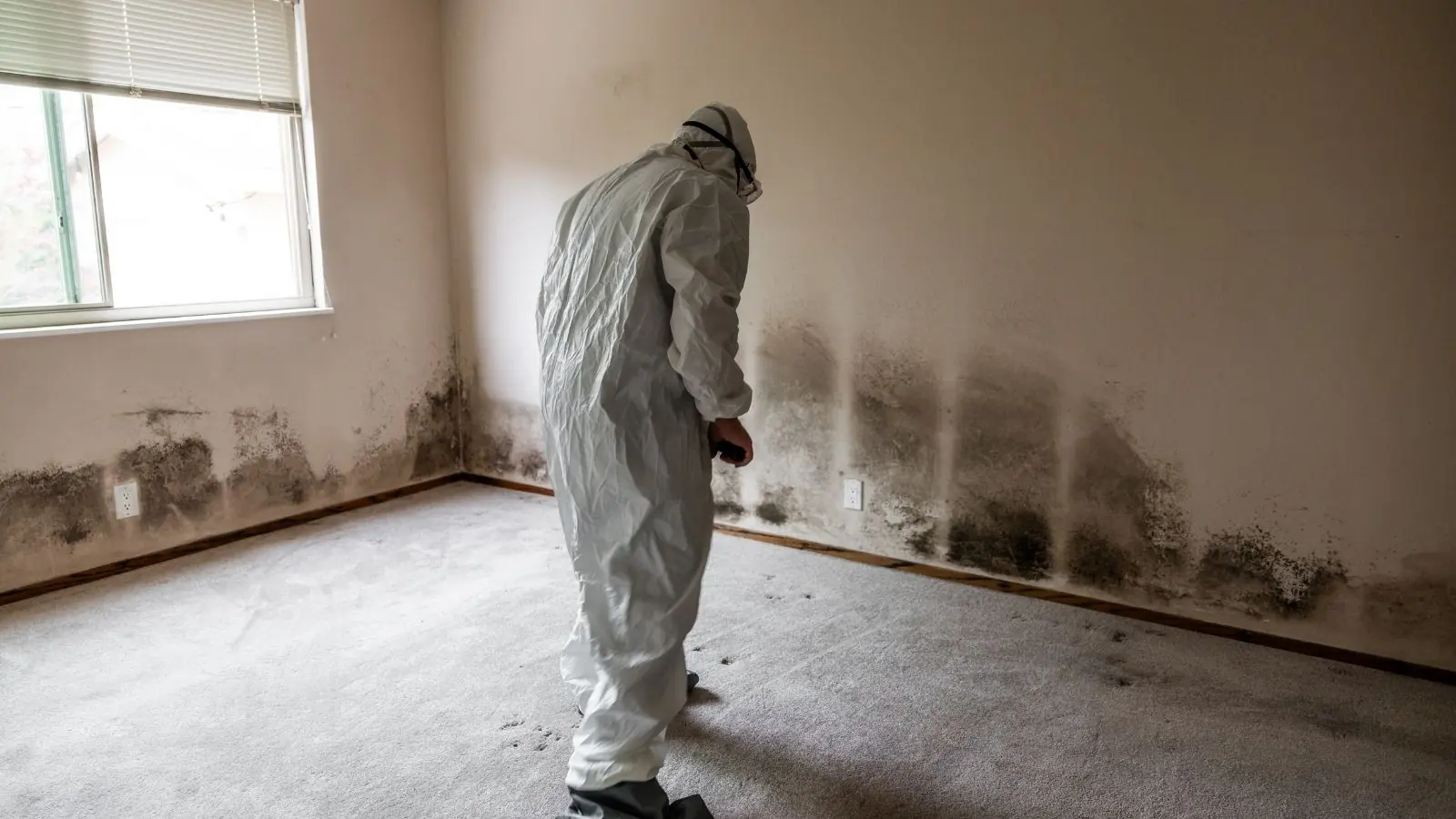
Basement mold removal cost in Evergreen, CO comes down to a written scope: how much material is affected, how that material has to be handled, and what has to happen before and after. A quote is a list of tasks with a price attached, so the useful skill is reading the list. This post covers the factors behind that list and leaves out dollar figures, because a number given without seeing your basement is a guess.
A quote starts with the scope, not the square footage
Two basements with the same footprint can need very different work. One has a stained patch on a concrete wall that cleans up with detergent and a brush. The other has moldy drywall over insulation over a damp sill plate, and the whole wall comes apart.
For that reason a careful estimator walks the space with a moisture meter and a thermal imaging camera before writing anything. Those readings show where material is wet and where it is only stained, which keeps the scope tied to the real damage. A quote written over the phone from a photo cannot do that.
The factors that change the scope
Each of these moves the work in one direction. The table below pairs every factor with the way it changes what the crew does.
| Factor | What changes in the scope |
|---|---|
| Affected area | More area means more containment, more labor hours and more disposal. EPA homeowner guidance treats about 10 square feet as the line for homeowner handling |
| Material type | Hard surfaces like concrete and sealed wood can often be cleaned. Porous drywall, carpet pad and insulation are generally removed |
| Hidden extent | Growth behind a wall means selective demolition and extra moisture mapping before work starts |
| Containment level | Poly barriers, negative air and a decontamination entry take setup time and equipment |
| Air scrubbing days | HEPA air scrubbers run for the length of the job, so a longer job carries equipment days |
| Moisture source | A leak, seep or drainage fault has to be repaired or the work can repeat |
| Drying needs | Wet framing and slab need air movers and LGR dehumidifiers until readings come down |
| Verification | Independent clearance testing is optional and adds a separate line |
| Rebuild | Replacing drywall, trim, flooring and paint is its own scope, separate from remediation |
Materials: what gets removed and what gets cleaned
Material is usually the single largest swing. Drywall, framing, carpet and insulation each respond differently to long dampness. Drywall and insulation that have grown mold are porous and typically come out, while dimensional lumber and concrete can often be cleaned and dried in place.
A finished basement tends to run higher on this factor because the amount of removable material is larger. An unfinished one, with bare block or poured walls and exposed joists, often has less to cut out. Ask for the quote to list each material by room so you can see where the work concentrates.
Containment and air handling
When mold-affected material is disturbed, the work area is sealed with polyethylene barriers and held under negative air so air moves into the room rather than leaking out. HEPA air scrubbers filter that air, and they usually run for days, not hours. The more containment a job needs, the more setup, equipment and teardown it carries.
Ask how many scrubbers are planned and for how many days. Mold remediation scopes vary here more than almost anywhere, so a quote that does not mention air filtration deserves a follow-up question. ANSI/IICRC S520 is a published standard for mold remediation, and it is fair to ask any company whether its crews work to it. It is also fair to ask whether your state licenses mold work.
The source repair is its own line
Removing mold without fixing the water behind it only resets the clock. EPA homeowner guidance says to fix the water source and dry wet materials within about 1 to 2 days when possible. That repair might be a plumber's work, a sump replacement, a regraded yard or a window well fix, and it may be billed by a different trade entirely.
Be clear in the quote about who owns each task. If a remediation company is handling extraction and drying, water-damage repair work such as replacing the drywall and flooring afterward is usually a separate scope, and sometimes a separate contractor.
Testing and clearance are optional lines
Routine sampling is not usually needed, since visible growth already tells you there is a moisture issue. Independent clearance testing, performed by a third party after the work is done, exists for some situations such as a lender or a home sale. When a buyer or lender asks for it, treat it as a separate line item and check with them about what they will accept. Nobody can promise acceptance in advance.
Bear Creek storm basements and drying first
In June 2026 a flash flood sent Bear Creek from about 6 cubic feet per second to nearly 1,900, with water lines of 2 to 3 feet on homes in Kittredge and Troublesome Gulch water entering houses.
For basements near the creek corridor that took water, drying has to come first, and the mold work follows only after moisture is controlled. A quote that skips straight to demolition before the readings are down is putting the steps in the wrong order.
The Colorado Division of Insurance advises contacting your insurer as soon as possible and sending an inventory of damaged property, with the information sent together because sending it in pieces slows processing. Take photos before anything is removed, keep receipts, and ask your insurer for instructions before repairs. Flood damage is usually excluded from standard policies and needs separate flood coverage, so check your policy.
How to compare two quotes
Put the quotes side by side and check that they describe the same job. A low number that leaves out containment, or air scrubbing days, or disposal, is not a lower cost for the same work. Look for these items on each: area and materials by room, containment type, number of scrubbers and days, who fixes the moisture source, and whether rebuild is included or excluded.
For jobs in the foothill communities, crews also work in places like Golden, where older basements often sit below storm sewers, and in Indian Hills, where steep lots affect drainage. Site conditions such as access and equipment staging can change the labor involved, so ask about them when you book the walkthrough.
Want your real number?
A walkthrough with a moisture meter turns these factors into a written scope for your basement.
Frequently asked questions
Why do two mold quotes for the same basement differ so much?
Usually the scopes differ, not the work rates. One may include containment, scrubbers and disposal while the other leaves them out, or one may assume wall demolition and the other cleaning. Ask each contractor to list scope by room and material.
Is post-removal testing required?
Not as a rule. Routine sampling is not usually needed, but independent clearance testing is available after remediation for situations such as a lender or a sale. It is a separate service from the removal itself.
Does insurance cover basement mold removal?
It depends on the cause and the policy. Sudden and accidental water damage is often covered, while gradual leaks and neglect often are not, and flood damage is usually excluded. Check your policy and ask your insurer, and do not assume approval.
My Evergreen basement flooded in the June 2026 storm. What goes first?
Document the damage, call your insurer, and get the water out and the structure drying. Mold work comes after readings show moisture is under control, and the drying records can also support your claim file.