
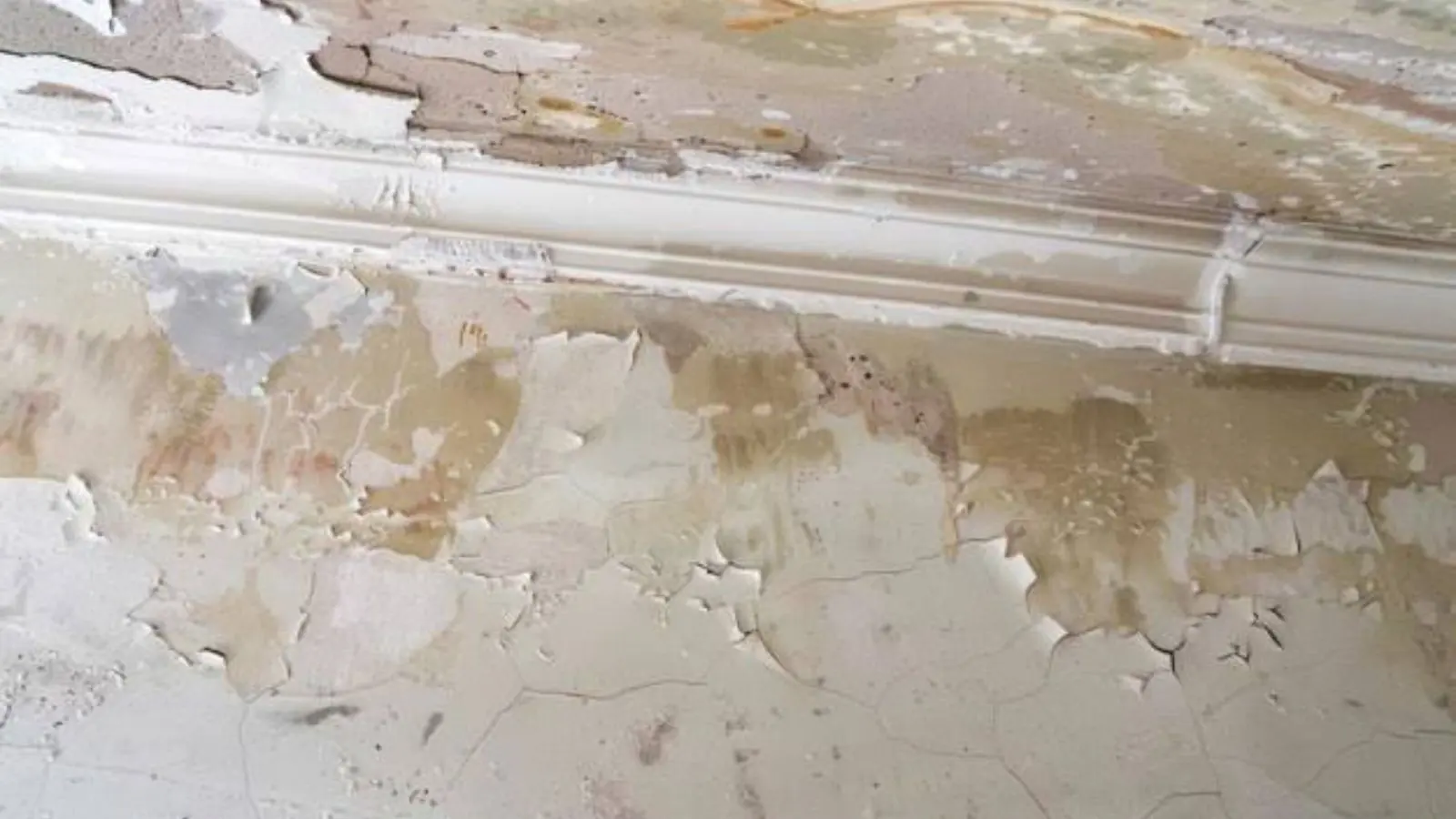
Drywall water damage repair in Evergreen, CO starts with one decision: leave the wall in place and dry it, or cut it out and replace it. Gypsum board is a paper-faced plaster panel, and it soaks up water like a sponge. Once the core goes soft, the panel loses its strength and cannot be trusted to hold paint, tape, or screws.
The decision is not a guess. A restoration technician reads the wall with a moisture meter, looks at it with a thermal imaging camera, and checks what kind of water got in. Those three answers settle most walls in a few minutes.
Walls that can often be dried in place
Drywall that got wet from a clean source, was caught quickly, and still feels firm has a fair chance of drying without removal. Think of a supply line that dripped for a short stretch, or a small spill that ran down one face of the board. The paper is intact, the surface is not bubbling, and the board does not flex when you press it.
In those cases crews set air movers along the wall and run an LGR dehumidifier in the room to pull moisture out of the air. They may drill small holes near the baseboard or lift the baseboard to push dry air into the cavity behind the board. The wall is then re-read with the meter until it matches a dry reference reading from an unaffected wall.
Painted drywall dries more slowly than bare board because the paint film slows evaporation. Vinyl wallpaper does the same thing, so crews often slit or peel it back to let the wall breathe. If you see wallpaper seams lifting, tell the crew, since that is a sign water is trapped behind the covering.
Signs the drywall has to be cut
Some conditions rule out drying in place no matter how good the equipment is. If you see any of these, plan on removal:
- The panel sags, bows, or has a belly in the middle of the wall or ceiling.
- The board feels soft or crumbles when pressed with a screwdriver tip.
- Paint is bubbling, the paper is peeling, or seams have opened.
- Fuzzy or dark growth shows on the face or on the back side of a removed outlet cover.
- Insulation behind the board is soaked, because wet insulation holds water against the back of the drywall for days.
- The water was contaminated, which is covered in the next sections.
Ceilings deserve extra caution. A ceiling panel that holds water can release all at once, so crews often relieve it by puncturing a small hole and cutting out the affected section before it fails.
Water category decides more than people expect
Restoration crews classify water into categories under the ANSI/IICRC S500 standard, the published industry standard for water damage work. Category 1 comes from a sanitary source such as a supply line. Category 2 is used water, such as a washing machine overflow. Category 3 is grossly contaminated, such as sewage or creek floodwater.
Porous materials like drywall that have absorbed Category 3 water are normally removed, not dried, because the contaminants are inside the board and cannot be reliably cleaned out. Ask any company you call whether its crews work to S500, and ask how they handle the category question on your job.
| Situation | Usual approach | What the crew checks |
|---|---|---|
| Clean supply leak, caught fast, board firm | Dry in place with air movers and a dehumidifier | Moisture meter readings against a dry reference wall |
| Clean leak, board soft or sagging | Cut out and replace the affected section | Where the wet area stops, including behind the wall |
| Gray water, such as an appliance overflow | Often removed, depends on contact time and materials | Category, how long the board stayed wet, insulation condition |
| Sewage or creek floodwater | Remove the wet drywall and insulation | How high water wicked above the visible line |
| Any wet board with visible growth | Stop and call, removal with containment | Size of the area and whether the cavity is affected |
How flood cuts are measured
When drywall must come out, crews usually do not cut at the visible waterline. Water climbs paper and gypsum by wicking, so the damp zone sits higher than the stain. A common trade practice is to cut above the highest point the meter finds moisture, then continue to a clean horizontal line or the next stud so the new board lands on solid framing.
Many crews cut in a straight line across the wall so the replacement sheet is easy to hang and finish. That is why a wall with a six-inch stain can end up with a much larger section removed. The line follows the meter, not the stain.
Insulation behind a flood cut comes out too if it is wet. Fiberglass batts that stay damp lose their value and hold moisture against the framing, so leaving them defeats the drying.
The repair sequence after the wall opens
Cutting out the board is the middle of the job, not the end. The studs and bottom plate are the next problem, because wood that stays wet is where trouble starts.
Dry the cavity
Open walls get air movers and a dehumidifier until studs, plates, and subfloor edges read dry on the meter.
Clean the framing
Crews wipe or treat exposed framing and bag debris so dust and wet material leave the house.
Check what is behind
Wiring, plumbing, and insulation get a look before anything is covered. A plumber or electrician may need to review them.
Hang new board
Replacement panels are cut to the stud lines and screwed in, with a small gap kept at the floor.
Tape, mud, and sand
Seams are taped and finished in thin coats, with drying time between each.
Prime and paint
Primer seals the patch so it does not flash through the finish, then the whole wall is painted corner to corner.
Our water damage repair work covers this rebuild stage, and the earlier water damage cleanup stage handles removal, debris, and sanitizing before any new board goes up. Keeping the two stages in order matters. Rebuilding over a wall that was never fully dried is how stains and soft spots return.
What Bear Creek floods teach about wet drywall
Bear Creek has a long flood record: the Mile High Flood District counts 24 known floods in the basin since the 1860s, and the June 2026 flash flood is the most recent reminder. In that storm Bear Creek overflowed in Kittredge and left water lines of 2 to 3 feet on home exteriors, and Troublesome Gulch water entered homes.
Creek water counts as contaminated, so drywall that wicked it is removed rather than dried. If water got into a home near the creek, plan on cutting above the highest wicking line and replacing wet insulation as well, even when the wall looks fine a day later.
Homeowners in places like Morrison, where Bear Creek and Mount Vernon Creek meet, and Idledale face the same rule after any creek event. Upstream rain can reach canyon-bottom homes quickly, so photograph the wall height of the water line before anyone starts demolition.
What to do before the crew arrives
Take photos of the stain, the wall, and any damaged contents before touching anything. Turn on the fans in the room only if the air is clean and your crew has not said otherwise, because moving air can spread contaminated dust. Keep carpet, pets, and children out of any area that took creek or sewage water.
Do not paint or caulk over a wet stain, since that seals moisture in. Do not wait for a stain to dry on its own either. EPA homeowner guidance puts the target at drying wet materials within about 1 to 2 days, because mold needs moisture to grow.
If your insurance may be involved, ask your insurer what documentation it wants before demolition begins. Crews can keep a labeled sample of cut material when asked.
Wet drywall in your Evergreen home?
Call for same-day response when available and have the crew read the wall before you tear anything out.
Dry or cut: a quick decision guide
Start with the water source. If it was clean and the wall is firm, ask for moisture readings before agreeing to demolition. If it was sewage or creek water, plan for removal. If the wall is soft, sagging, or growing something, removal is already decided.
Then ask who will check the framing and insulation behind the wall. A neat patch that covers a wet cavity is the most common reason a repair fails. When homes in Conifer or other higher-elevation areas get cold and dry out slowly, the extra drying days are worth it.
Frequently asked questions
Can wet drywall always be dried instead of replaced?
No. Drywall from a clean source that is still firm and not bubbling can often be dried in place, but soft, sagging, moldy, or contaminated board is normally cut out. The meter readings and the water category decide it.
How far above the stain do crews cut?
Usually above the highest point the moisture meter finds, because water wicks upward inside the board. The cut is then squared off to a stud so the replacement sheet fits cleanly. Ask the crew to show you the readings that set the line.
Why is creek floodwater treated differently from a pipe leak?
A pipe leak usually carries clean supply water, while creek water picks up soil, debris, and whatever else it passes. That puts it in the most contaminated category, so absorbed drywall is removed. This applies to homes along Bear Creek and its side drainages.
Do I need to cut drywall after the June 2026 storm if the wall looks dry?
A wall can look fine while the insulation and bottom plate behind it are still wet. If creek or gulch water reached your home, have the wall checked with a moisture meter and a thermal camera before deciding. Surface appearance is not a reliable guide.