
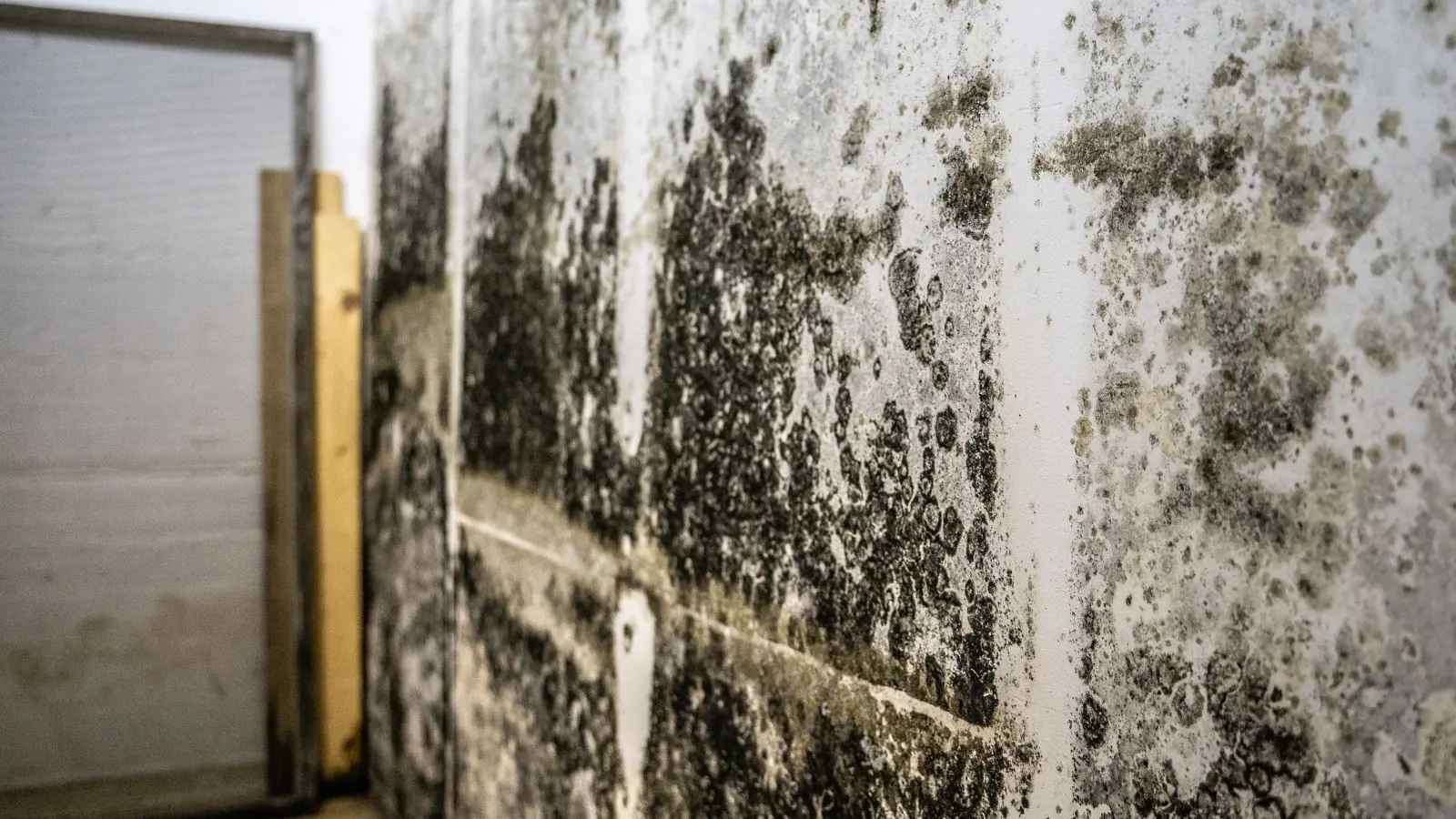
Mold in a basement in Evergreen, CO is a moisture problem first and a cleaning problem second. Mold grows on drywall, wood, carpet, cardboard and dust wherever damp conditions last, and a below-grade room gives it plenty of both. The real question is whether the job fits a homeowner with a respirator and a free weekend, or whether it needs trained crews and containment.
Start with the size of the patch
EPA homeowner guidance draws the line at roughly 10 square feet, about a three-by-three-foot square. A surface patch smaller than that, on a hard material, is something many homeowners handle with protective gear and careful cleaning. Larger areas, or growth that keeps returning to the same spot, point toward a professional.
Measure before you decide. Lay a tape measure along the stained area and add up every separate patch on the same wall or floor, because three scattered patches near a window well can add up to more than one obvious stain. If you are arguing with yourself about whether it is "about 10," treat that as a sign to get a second opinion.
Visible growth versus what you cannot see
A basement hides things. Mold on the face of a wall can mean more behind it, especially when a finished room sits over a concrete foundation with framing and insulation in between. A musty smell with no visible growth often means damp material somewhere you cannot reach.
Moisture meters and thermal imaging cameras help here because they read the wall instead of guessing. A thermal camera shows cool, wet patches behind drywall, and a pin or pinless meter confirms whether studs and sill plates are still holding water. Cutting open a wall to look is a decision for after those readings, not before. A professional who opens a wall will also be set up to contain the dust that comes with it.
Fix the water before you touch the mold
EPA homeowner guidance is plain on this: mold needs moisture, so the water source has to be found and fixed first. Wet building materials should be dried within about 1 to 2 days, because that is the window where growth is easiest to head off. If you scrub a wall and leave the leak, you have only cleaned the problem on a schedule.
Common basement sources include a failed window well drain, a cracked supply line, a sump pit that stopped cycling, a dripping condensate line and exterior grading that sends runoff toward the foundation. For active leaks or recent flooding, water mitigation comes first, with extraction, air movers and LGR dehumidifiers pulling moisture out before any mold work begins.
What Evergreen basements are up against
At about 7,160 feet, Evergreen gets roughly 80 inches of snow a year. That snow melts against foundation walls through spring, and a basement with marginal drainage can stay damp for weeks. The practical step is to walk the outside of the house during a thaw and check that downspouts and grading push meltwater away from the foundation.
Many mountain homes here also run on private wells. Jefferson County Public Health notes that Colorado does not regulate private well water quality, so well owners are responsible for their own systems. If the pressure tank, well-pump plumbing or a treatment unit lives in your basement, a slow drip from those fittings is a moisture source worth inspecting before you blame the walls.
Gear for a small DIY cleanup
If your patch is small and sits on a hard surface, protect yourself before you start. Wear an N95 or better respirator, snug goggles without vent holes, and long gloves. Keep the area closed off from the rest of the house, run a fan that exhausts through a window, and bag moldy debris before you carry it out.
EPA homeowner guidance also covers cleaning in cautious terms: detergent and water on hard surfaces, followed by thorough drying, is the usual approach, and bleach is not generally recommended as a routine fix. Never mix cleaning products, and keep the room ventilated. Porous materials such as ceiling tile, carpet and insulation that have grown mold are normally discarded rather than cleaned.
What a professional job looks like
Professional work is built around keeping spores from spreading while the material comes out. The crew seals the work area with polyethylene containment barriers, runs negative air so air flows into the room instead of out of it, and filters that air through HEPA air scrubbers. Porous materials such as drywall, insulation and carpet pad are cut out, bagged and removed, and framing is cleaned and dried.
You can read more about how this work is scoped on the mold remediation page. ANSI/IICRC S520 is the published industry standard for mold remediation, so ask any company you consider whether its crews work to it. Also ask whether your state licenses mold work, since rules differ and the answer tells you what to expect from a contractor.
A decision framework for your basement
| Situation | Lean toward | Why |
|---|---|---|
| Under about 10 square feet, hard surface, source already fixed | DIY with protection | Matches EPA homeowner guidance for small surface areas |
| Over about 10 square feet | Professional | Containment and filtration matter at this scale |
| Musty smell, nothing visible | Professional assessment | Moisture meter and thermal camera find hidden damp |
| Growth on drywall, carpet or insulation | Professional | Porous materials are generally removed, not cleaned |
| Recent flood or sewage backup | Water mitigation first | Drying and safe handling come before mold work |
| Same patch keeps returning | Find the source | Ongoing moisture means the cause is still active |
Questions to settle before you buy supplies
Work through these in order, and stop at the first one that gives you pause.
- Locate the water: Trace the stain upward and outward to find the leak, seep or condensation that feeds it.
- Stop the supply: Repair the line, clear the drain or redirect the grading, then confirm with a moisture meter that readings are falling.
- Measure the area: Add up every patch, and note anything on drywall, insulation or carpet.
- Check for hidden extent: Look for bubbling paint, soft baseboard, damp carpet edges and odor in closed cavities.
- Decide on DIY or crew: Small, hard-surface and dry means DIY. Large, hidden or porous means a professional.
When nearby homes face the same thing
Crews dispatch around the clock across the foothills, and basements in higher, snowier areas such as Conifer deal with the same melt-driven dampness. Homes along the canyon corridor near Morrison have the added problem of creek-adjacent soil that holds moisture. The sorting steps above apply in all of those places.
Not sure what is behind the wall?
Describe what you are seeing and we can talk through whether it sounds like a job for you or a crew.
Frequently asked questions
Can I just paint over basement mold?
Painting over growth does not remove it or stop the moisture that feeds it. The film can peel as damp material keeps releasing moisture behind it. Remove or clean the growth first, dry the material, and fix the water source before any finish goes on.
Do I need testing before cleanup?
Routine sampling is not usually needed, according to EPA homeowner guidance, because visible growth already tells you there is a moisture problem. Independent clearance testing does exist after remediation, and some situations such as a lender or a home sale call for it. Whether a particular buyer or lender accepts the result is a question for them.
Is a dehumidifier enough to get rid of basement mold?
A dehumidifier helps keep air dry, but it does not remove existing growth or dry out wet framing on its own. Treat it as a way to hold conditions steady after the water is fixed and the affected material is dealt with.
My Evergreen house has a well. Does that change anything?
It can. Well owners in Jefferson County are responsible for their own water systems, and pressure tanks, pumps and filters often sit in basements. Check those fittings for slow drips, and ask Jefferson County Public Health at 303-232-6301 about well testing and inspection.