
Structural drying and dehumidification in Evergreen, CO is the controlled process of pulling water out of framing, subfloors, drywall and flooring until each material reads dry against a set goal. It starts after standing water is gone and continues, with equipment running and readings taken every visit, until the numbers say the building is dry. The line is answered 24/7.
Why drying is its own stage of the job
The first hours of a water loss are about stopping the source and removing what can be pumped or vacuumed. That work is covered on the water mitigation page. Drying is what comes next, and it is slower, quieter and more technical.
Wet materials do not give up their water on their own schedule. A stud, a sheet of subfloor or a stretch of plaster can hold moisture for days after the surface looks dry. EPA homeowner guidance on mold says to dry water-damaged areas within about 1 to 2 days, so the drying plan has to start fast and prove itself with readings, not with how the room feels.
Moisture mapping: finding every wet surface
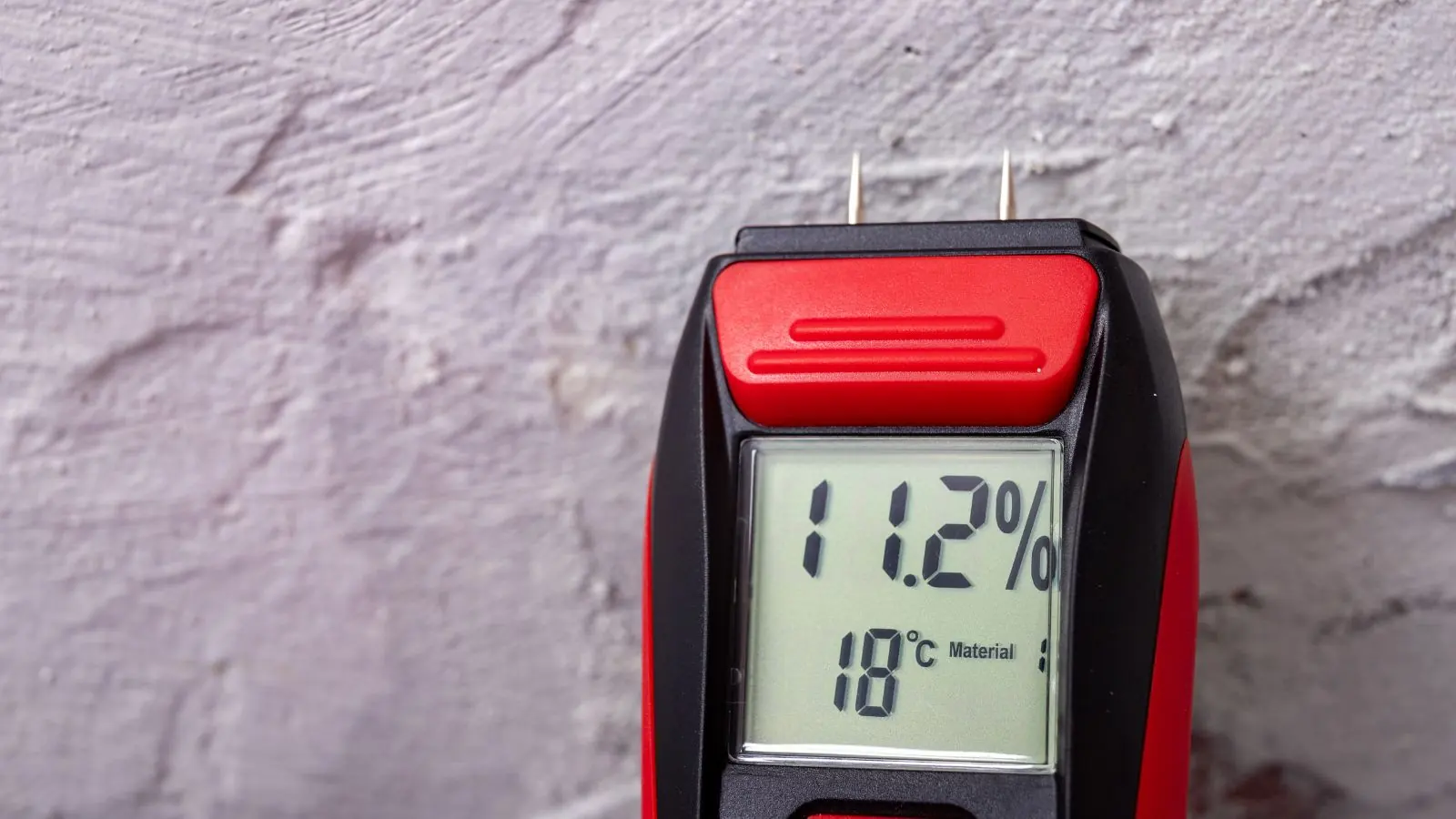
Before any equipment goes in, the crew finds out how far the water went. A pin or pinless moisture meter reads moisture inside drywall, trim, wood and concrete. A thermal imaging camera shows cooler patches where evaporation is happening behind paint or under flooring, which points the meter to the right places.
The crew marks readings on a sketch or photo set, with a baseline taken from a dry part of the same house. That baseline matters because every home and every material starts at a slightly different level. The drying goal comes from those dry readings, not from a number on a chart.
Psychrometrics in plain words
Psychrometrics sounds technical, but the idea is simple. Water leaves a wet material and goes into the air, and air can only hold so much. Warm air holds more than cold air, and once the air is full, drying stalls.
So the crew manages three things at once: air movement, air temperature and humidity in the room. Air movers push dry air across wet surfaces to lift water out. Dehumidifiers then pull that water out of the air so it cannot settle back into drywall or carpet. If either side is missing, the job drags.
The equipment and what each piece does
| Equipment | What it does | Where it earns its place |
|---|---|---|
| Pin and pinless moisture meters | Read moisture inside materials | Every visit, on every marked point |
| Thermal imaging camera | Shows evaporative cooling behind surfaces | Early mapping and wall checks |
| Air movers | Push air across wet surfaces | Floors, baseboards, low walls |
| LGR dehumidifiers | Pull water vapor out of the air at modest humidity | Most closed-up residential jobs |
| Desiccant dehumidifiers | Dry air with a chemical wheel instead of cold coils | Cold rooms and very low target humidity |
| Thermo-hygrometer | Logs air temperature and humidity | Every visit, to confirm the room is drying |
LGR stands for low grain refrigerant, a type of refrigerant dehumidifier that keeps removing water even when the air is already fairly dry. A desiccant unit uses a drying wheel and is chosen when coils would struggle, such as in a cold space. The crew picks by room conditions, so ask which type is on your job and why.
Drying inside walls, cavities and subfloors
The hardest water to remove is the water you cannot see. Wet insulation, bottom plates and the cavity between studs can stay wet while the paint reads dry. A crew may drill small holes or lift the baseboard to push dry air inside, or remove a strip of drywall near the floor to open the cavity.
Subfloors work the same way. Plywood and OSB under flooring dry from the top and bottom, so a crew may set air movers in a basement ceiling or crawl space, or use floor drying mats on a hardwood surface. Concrete takes the longest because it stays damp deep inside the slab long after the surface feels dry.
Daily readings and the drying goal
Each visit, the technician re-reads the same marked points and the room conditions, then logs the numbers. Falling readings mean equipment can stay put. Flat readings mean something is wrong, such as a trapped pocket of water, a closed door that stops air from moving or a dehumidifier that is too small.
Equipment is moved, added or removed based on those numbers. The job is done when each wet material reaches the goal set from your dry baseline, not when a set number of days has passed. At that point the log becomes your proof of dry for repair and for your insurer.
When to stop, and when stopping early costs you
Ending drying early is the most common way a dry-looking house goes bad. Framing sealed behind new drywall while it still holds moisture can support mold behind the paint. EPA homeowner guidance puts the first window at roughly 1 to 2 days to dry wet materials, so the first days of the log matter most.
If a material will not reach goal, the crew may recommend removing it. Soaked pad, insulation and some particleboard are examples. Taking one piece out is often faster than waiting for a material that can never meet the number.
Evergreen conditions that shape a drying job
Evergreen sits at about 7,160 feet, and a wet crawl space or basement in winter can be cold, which slows evaporation in any climate. Crews watch the thermo-hygrometer and room temperature, and may add heat or choose a desiccant unit. Elevation by itself is not a reason to expect a longer or shorter job, so judge yours by its readings.
NOAA climate normals as summarized for the Evergreen station put annual precipitation at roughly 18.6 inches, which means the outdoor air is not a dependable drying partner. Opening windows can pull in cold or damp air in the wrong season. The crew measures indoors and sets the plan from what it finds.
Drying equipment and electrical safety
- Do not unplug or move running equipment cords across wet floors. Ask the crew to reposition them.
- Keep children and pets away from air mover intakes and dehumidifier exhaust.
- Leave drilled holes and opened cavities alone until the crew has logged them.
- Do not open the panel if the area around it is wet. Call the utility or 911 first.
- Do not turn dehumidifiers off to save power. A stalled job costs more days.
What affects the cost of drying
Drying cost depends on the loss, so no honest figure comes before a look. These are the factors.
- Water category, because contaminated water adds cleaning and removal before drying.
- Square footage and number of rooms or floors affected.
- Materials involved, since hardwood, plaster and concrete dry slowly.
- Number of equipment units and number of days they run.
- Whether cavities, subfloors or ceilings must be opened to get air in.
Want your real number? Describe the loss to dispatch and ask how the scope is built.
Drying records and your insurance
Sudden and accidental water damage is often covered, gradual leaks often are not, and flood damage usually needs separate flood coverage. Check your policy and ask your insurer what documentation it wants. Daily moisture logs, photos and equipment records are the kind of paper that supports a claim, though approval is always your insurer's decision.
Crews that follow the published ANSI/IICRC S500 standard for water damage restoration work from documented readings and defined water categories. Ask any company whether it works to that standard and how it records its readings.
Related work after drying
Once the log shows stable, dry readings, rebuilding can start safely. That is the water damage repair stage, and it goes faster when the drying record is clean. If you live in the hills above town, a crew serving Conifer or Indian Hills can talk through access for equipment before the job starts.
Wet walls or floors right now?
Dispatch is open 24/7 and can explain how drying is set up and logged.
Frequently asked questions
Is emergency structural drying available in Evergreen, CO?
Yes. Dispatch takes calls at any hour and offers same-day response when available. The dispatcher asks what is wet, how long it has been wet and what water category you are dealing with, then arranges the crew and tells you what to do while you wait.
How many days will drying take?
It depends on the materials, the amount of water and the room conditions, and several days is common. Hardwood, plaster and concrete take longer than carpet and drywall. The log shows when readings reach the goal, and that decides the end date.
Can I use rented fans and a hardware store dehumidifier instead?
For a small spill on a surface, yes. If water reached a wall cavity, subfloor or insulation, ask for moisture mapping first, because household equipment cannot confirm what is inside a wall.
What is the drying goal?
It is the moisture level of the same type of material in a dry part of your home. Wet materials are dried until their readings match that baseline, and the crew logs each visit.
Why is the dehumidifier running if the water is already gone?
Standing water is out, but wet materials keep releasing vapor into the air for days. The dehumidifier catches that vapor before it lands on drywall or carpet, which is why equipment stays on until readings reach goal.
What does LGR mean?
It stands for low grain refrigerant. It is a refrigerant dehumidifier built to keep pulling water from the air even when humidity is already fairly low, which is why crews use it on most closed residential jobs.