
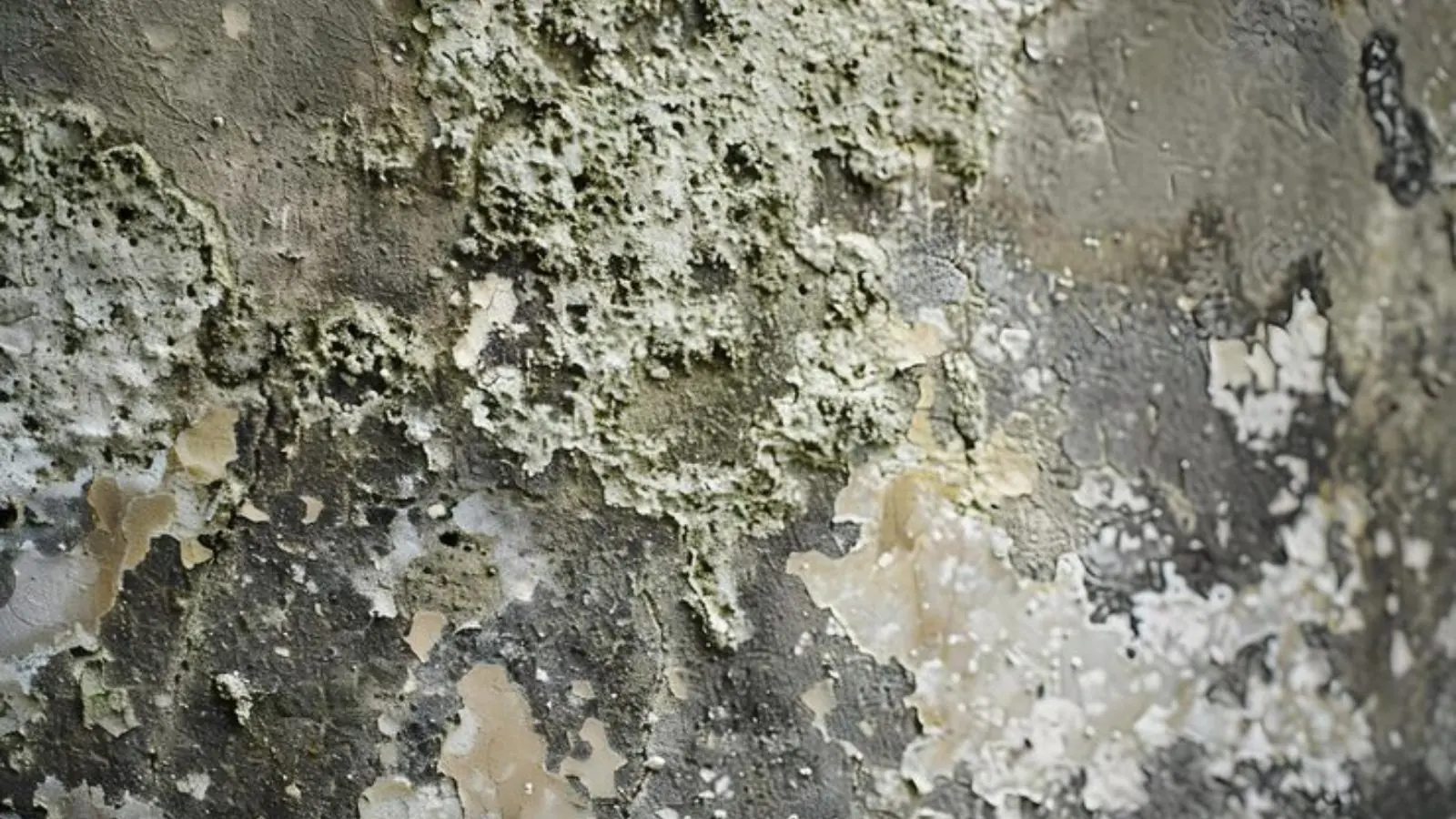
"Black mold" is a common name homeowners use for dark mold growth, not a diagnosis, and the honest answer to what kills it in Evergreen, CO is that moisture control matters more than any product. Mold needs water to grow. Take the water away and growth stops, whatever you spray on it.
This guide explains what products can and cannot do, why dead mold still has to be dealt with, what professionals do instead, and what Evergreen homeowners should know before making repairs.
The honest answer: control the moisture
EPA homeowner guidance is plain on this point: mold needs moisture, so the first step is to fix the water source and dry wet materials quickly, within about 1 to 2 days. Until that happens, any product you apply is a temporary measure on a surface that will stay damp.
That is why a leak behind a wall, a damp crawlspace corner or a window that keeps taking in rain will keep producing growth no matter what is sprayed on it. A moisture meter tells you more about the future of a patch than a bottle label does.
Can you tell what you have by its color?
No. Mold comes in many colors, and you cannot tell the species by looking. Dark growth is sometimes called black mold, but that name is shorthand, not a finding. A lab is the only way to identify a species, and most homeowners do not need that step, because the response is the same: fix the moisture and remove the affected material.
No color of mold should be treated as more dangerous than another on appearance alone. If you have health questions about mold exposure, bring them to your physician.
What products can and cannot do
Many household products can kill some mold on a hard, nonporous surface. Bleach, vinegar and commercial sprays are all marketed this way, and EPA homeowner guidance is cautious about all of them. It says cleaning with detergent and water and drying thoroughly is generally the approach for small areas, and it does not recommend relying on a biocide as a routine step.
The reason is that products mostly work on the surface. Mold on porous materials like drywall, ceiling tile, carpet and untreated wood reaches into the material, and a liquid cannot reach all of it. Wetting a porous surface can also add moisture.
Mixing products adds another risk. Combining bleach with other cleaners can release harmful fumes, so never mix them, and read product labels for ventilation and protection instructions.
Why removal beats killing
Even when a product does kill the growth, the dead material is still there. Spores and fragments left behind stay in the material and in the dust, and removal is what takes them out of the home. A stain left after killing is also a poor guide to whether the problem is solved.
That is why the usual standard in remediation is to remove the growth and, where materials are too damaged, remove the materials. Killing is a step some crews take, but it is not a substitute for removal and drying. Think of the job as taking out the mold and the moisture, not wiping a stain.
Myth versus fact
| Common belief | What is closer to the truth |
|---|---|
| Spraying bleach on a moldy wall solves it | Bleach may lighten the stain on a hard surface, but it does not dry the wall or reach into porous material |
| Vinegar is a safe cure for any mold | Vinegar is a household cleaner with limits, and EPA guidance leans on detergent, water and drying |
| Black mold is always the worst kind | Color does not identify a species, and only a lab can |
| Dead mold is harmless to leave in place | Dead growth still needs to be removed with the damaged material |
| Painting over it seals it in | Paint hides a stain and does not dry wet materials |
| A fog or foam treatment ends the problem | Without fixing moisture, growth can return |
| Testing is always the first step | EPA guidance says routine sampling is not usually needed |
What professionals do instead
A restoration crew does not rely on one product. It follows a sequence, and each step addresses a different part of the problem.
First, the crew finds the moisture source, using moisture meters and a thermal imaging camera to map wet areas. Then it sets up containment with plastic sheeting and negative air, so disturbed material does not travel through the house. HEPA air scrubbers run during the work.
Next comes removal. Surface growth on solid materials is cleaned with HEPA vacuuming and damp wiping, and porous or damaged materials are cut out, bagged and removed. After that, drying: air movers and LGR dehumidifiers bring the structure back to a stable moisture level. Finally, the crew verifies the result, usually by checking readings and visually inspecting the area.
Ask any company whether its crews work to ANSI/IICRC S520, the published standard for mold remediation, and ask whether your state licenses mold work. Our mold remediation page describes the process in more detail, and water mitigation comes first when a fresh water event caused the problem.
No honest company can promise mold will never return. Dry materials and fixed leaks make a recurrence less likely, and that is as far as any promise can go.
Insurance and county contacts for Evergreen homeowners
If mold followed a sudden water event such as a burst pipe, the Colorado Division of Insurance advises contacting your insurer as soon as possible, taking steps to prevent more damage, and getting the company's instructions before making repairs.
Document the damage with photos, send an inventory of damaged property in one package, because sending information in pieces slows processing, and keep receipts if you need to live elsewhere. Check your policy, since gradual leaks and neglect are often not covered.
For questions about indoor environments in your area, Jefferson County Public Health's Environmental Health Services is the county office to ask, at 303-232-6301. Homeowners in nearby areas such as Morrison or Conifer can use the same county office. Health questions about exposure belong with a physician.
What to do this week
Start with the water. Find it, stop it, and dry what got wet. Photograph the damage before you touch it, and call your insurer if the cause was sudden. If the growth covers a small area, roughly 10 square feet or less, EPA homeowner guidance says a homeowner can often handle it with protection, using detergent and water and drying thoroughly.
If the growth is larger, hidden, or tied to a flood or sewage event, bring in a professional. Hidden growth, a persistent musty smell with no visible source, and soft or stained materials are all reasons to have a crew take readings.
Dealing with dark growth and not sure where to start?
Our restoration professionals can find the moisture and explain what needs to come out.
Frequently asked questions
Does bleach kill black mold?
Bleach can kill some surface mold on hard, nonporous materials, but it does not reach into porous materials and does not dry out a wet area. EPA homeowner guidance favors detergent, water and thorough drying for small areas. Never mix bleach with other cleaners.
Is vinegar better than bleach?
Both have limits. Neither fixes the moisture, and neither removes damaged drywall or wood. Vinegar is a household cleaner, not a remediation method, and the same rule applies: dry the material and remove what cannot be cleaned.
Do I need to test to find out if my mold is dangerous?
Routine sampling is not usually needed. You cannot tell a species by color, and a lab is the only way to identify one. For health questions, talk to your physician, and for the building, focus on fixing moisture.
I live in Evergreen and my insurer asked me to wait before repairs. What should I do?
The Colorado Division of Insurance advises getting your insurer's instructions before making repairs, while still taking steps to prevent further damage. Photograph everything, keep receipts, and send your inventory together. Dry the area and ask your insurer what they need before removing materials.