
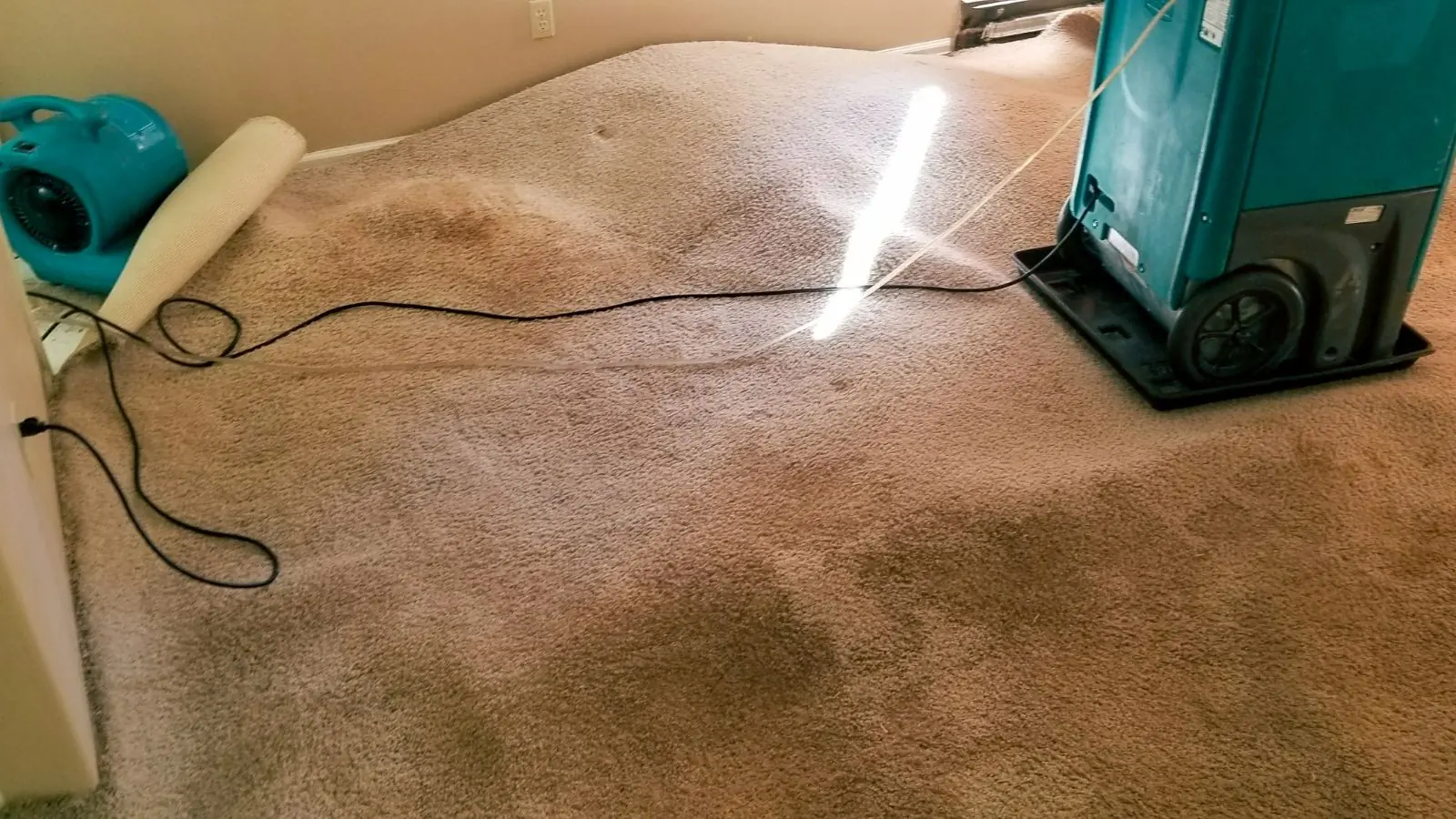
Carpet water damage restoration in Evergreen, CO is the work of removing water from carpet and pad, drying the floor beneath them and deciding what can be reused. Carpet fibers hold less water than the pad and subfloor under them, so the surface can feel nearly dry while the layers below stay soaked. The main questions are what kind of water it was, how long it sat and how the carpet was installed.
Why timing matters for wet carpet
EPA homeowner guidance on mold says wet or damp materials should be dried within about 1 to 2 days to keep mold from growing. The same guidance lists carpet among absorbent materials that may have to be thrown away if they become moldy, and names the underside of carpets and pads as a place where hidden mold can sit. That makes the first two days the practical window for saving a carpet.
After that window, a damp pad can hold moisture against the subfloor and tack strip. A carpet that sat wet over a weekend may still be saveable if the water was clean, but it needs readings, not guesses.
Water category decides the plan
Water in restoration is sorted into three categories under the published ANSI/IICRC S500 standard. The category sets how the carpet is handled, not the amount of water.
| Category | Typical source | What usually happens to carpet |
|---|---|---|
| Category 1 | Supply line, faucet, clean rain through a roof | Carpet is often extracted and dried in place, pad may be replaced |
| Category 2 | Washer or dishwasher discharge, overflow with some contamination | Carpet may be cleaned and dried if treated quickly, pad is usually replaced |
| Category 3 | Sewage, creek or flood water, long-standing water | Carpet and pad are usually removed and discarded |
Clean water can change category over time. A supply-line leak that soaks carpet for several days can turn from Category 1 into something that needs more cleaning, because bacteria grow in damp fiber and pad. Ask the crew which category your loss falls into and why.
Why Category 3 carpet is usually removed
Carpet is porous, and sewage or flood water soaks into the backing, the pad and the tack strip area. Cleaning the surface does not remove what has soaked into those layers, and the pad cannot be washed. Most crews remove and discard Category 3 carpet and pad, then clean and disinfect the subfloor before any new floor goes in.
This matters in the hills because most of the Conifer area relies on onsite septic systems, and Jefferson County Public Health regulates septic in unincorporated areas. A backup from a septic line is Category 3, so the carpet is treated as contaminated. See the water damage cleanup page for what happens to the room afterward.
What you see and what it means
- Squishy sound underfoot: the pad is saturated, even if the carpet top looks fine.
- Dark ring or stain at the wall edge: water wicked up the tack strip or baseboard.
- Musty smell that returns: moisture is still in the pad or subfloor.
- Ripples or loose carpet: the backing has stretched, and it may need stretching or re-installation.
- Brown water mark that returns after cleaning: soil or stain is wicking up from the pad.
How carpet is extracted and dried
Extraction comes first. A truck-mounted or portable extraction unit pulls water out of the carpet and pad, and a weighted tool presses water from the pad. The crew then uses moisture meters on the carpet backing, the pad and the subfloor, and a thermal imaging camera to find cooler, wetter spots.
For Category 1 carpet in good shape, the crew may lift a corner, float the carpet on air movers and remove the pad, then dry the subfloor and replace the pad later. That keeps the carpet but gets air to the layer that holds water. The drying steps are the same ones described on the structural drying page, with readings logged each visit.
Tack strip, subfloor and the pad
The tack strip is the wood strip with pins that holds carpet at the walls. When it is wet, it can stain, swell or crack, and the crew may replace it. Plywood or OSB subfloor is dried and checked for swelling, and concrete slabs are dried until readings match a dry area of the house.
Pad is almost always replaced. Foam and rebond pad hold water and cannot be dried reliably under a carpet, and replacing it removes the risk of trapped moisture. The carpet can often be reinstalled over a new pad.
Carpet safety before the crew arrives
- Shut off the water source, then stay out of the room if water is near outlets or the panel.
- Do not use a household vacuum on wet carpet. It can shock you and ruin the motor.
- Keep children and pets off wet carpet if the water might be sewage, creek or flood water.
- Wear boots and gloves if you must enter contaminated water.
- Lift furniture off the carpet and put foil or plastic under the legs to prevent stains.
- Leave pulled-up carpet in place until it has been photographed.
Stretching, reinstall and odors
If a carpet is saved, it has to be stretched back into place with a power stretcher, since wet backing relaxes and ripples. Seams are checked, and a new pad goes in before the carpet is tacked down again. Not every carpet can be restretched, especially if the backing has delaminated.
Odors come from bacteria and mold growing in damp material. The cure is drying and removing what held the moisture, and deodorizers only cover a smell if moisture is still present. If a smell returns after cleaning, ask for moisture readings in the pad and subfloor, and use mold remediation if growth is found.
Locations around Evergreen
Conifer sits at roughly 8,000 feet plus, higher than Evergreen, so a supply line that fails in an unheated crawl space or a vacant winter home can soak carpet for days before anyone sees it. If that describes your Conifer home, tell dispatch how long the water ran.
In the canyon around Idledale, at about 6,600 feet along Bear Creek, a creek or flood event would make carpet Category 3, so ask the crew to confirm before anything is saved.
What affects the cost of carpet restoration
No honest number comes before the carpet is seen. These factors shape it.
- Water category and how long the carpet stayed wet.
- Area of carpet, and whether it runs through several rooms or stairs.
- Quality and age of the carpet and pad.
- Whether the subfloor, tack strip or baseboard also need work.
- Days of drying equipment.
- Whether the carpet is reinstalled, restretched or replaced.
Want your real number? Describe the room to dispatch and ask how the scope is built.
Insurance and documentation
Sudden and accidental water damage is often covered, gradual leaks often are not, and flood damage usually needs separate flood coverage. The Colorado Division of Insurance advises contacting your insurer as soon as possible, sending an inventory of damaged property, and keeping receipts for temporary housing if the home is unlivable. It also says sending information in pieces can slow a claim, so gather photos of carpet, pad and receipts before you submit.
Check your policy and ask your insurer what it needs. We cannot promise what it will approve.
Carpet wet right now?
Dispatch is open 24/7 and can tell you what to lift and what to leave alone.
Frequently asked questions
Is emergency carpet water damage restoration available in Evergreen, CO?
Yes. The dispatch line is answered 24/7, and same-day response is offered when available. Tell the dispatcher what the water was, how long the carpet has been wet and whether any of it is sewage or creek water, and you get first steps while a crew is lined up.
Can wet carpet be saved?
Often, if the water was clean and drying starts within a day or two. The pad is usually replaced, and the carpet is dried on air movers and checked with a meter. If the water was sewage or flood water, the carpet is usually removed.
Why is the pad thrown out when the carpet is kept?
The pad holds water, cannot be cleaned and dries slowly under carpet. Replacing it is simpler and safer than risking trapped moisture against the subfloor.
How do I know whether my carpet is Category 1 or Category 3?
The source decides it. A supply line is usually clean, a washer discharge is gray, and sewage or flood water is Category 3. Ask the crew to explain the category and note it in writing.
My carpet dried but still smells. Why?
Moisture may still be in the pad, the tack strip or the subfloor. Ask for moisture readings in those layers, because deodorizers do not fix wet materials.
What should I keep for the insurance claim?
Keep photos of the carpet and pad before they are moved, a list of every damaged item, and receipts for temporary housing or repairs. Sending everything at once is usually faster than sending pieces.