
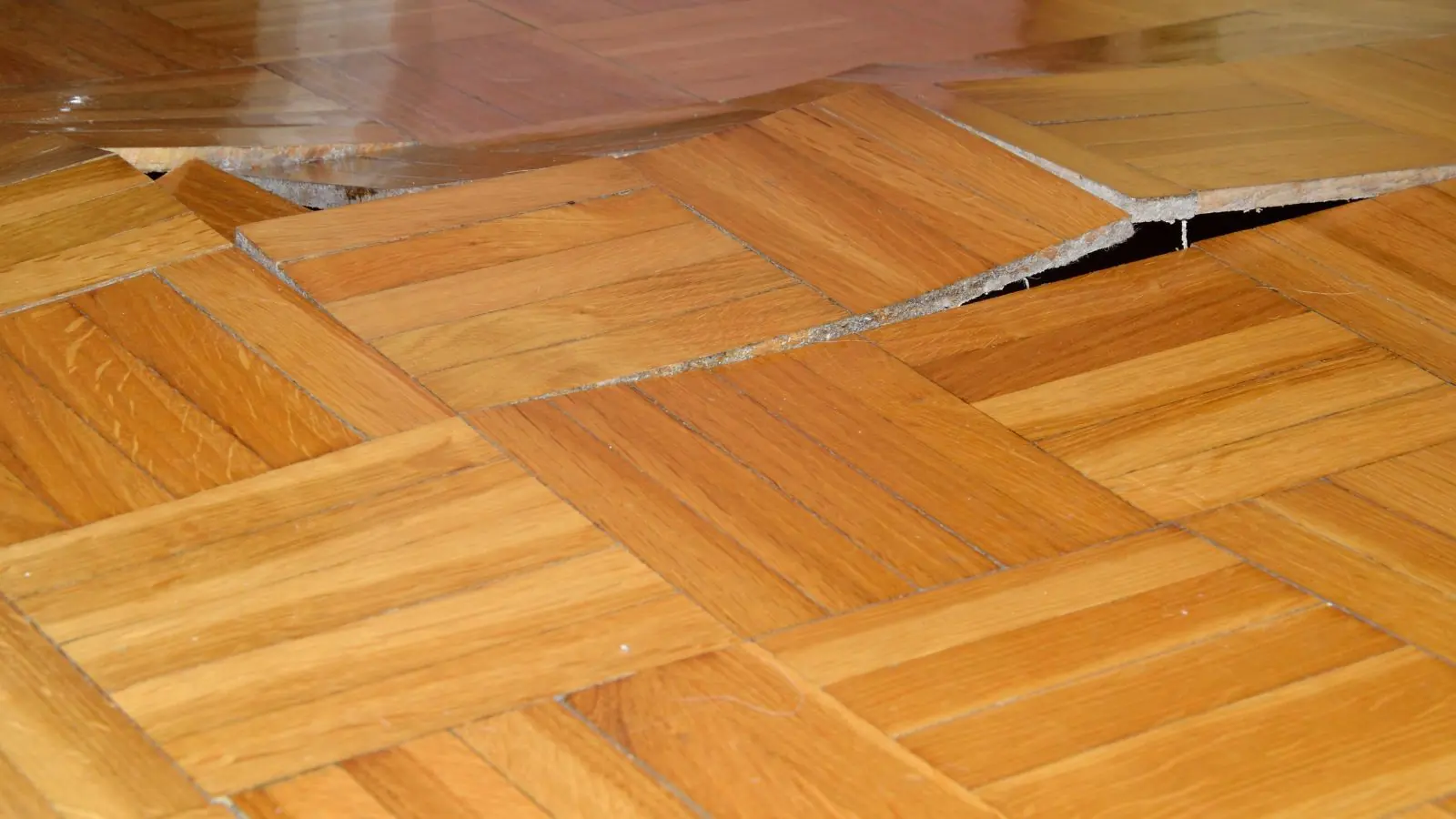
Hardwood floor water damage repair in Evergreen, CO deals with boards that have absorbed water from a leak, a spill, a storm or a wet subfloor. Wood is hygroscopic, which means it takes up and gives off moisture depending on the air around it, so a wet floor changes shape as it swells. The question is whether that movement can be reversed by drying or whether boards have to come up.
What happens to wood when it gets wet
The USDA Forest Products Laboratory's Wood Handbook describes wood as hygroscopic, meaning it absorbs and releases moisture based on the humidity and temperature of the air and the moisture already in it. It also notes that many problems in using wood come from moisture changes or excess moisture. On a floor, that translates to boards that grow wider as they soak and shrink as they dry.
Boards rarely swell evenly, which is why wet floors warp in recognizable ways. The face of a board dries first, the underside stays wet, and the board curls. Fast, controlled drying gives the wood time to settle back, while a floor left wet for weeks locks in the damage.
Cupping, crowning, buckling and staining
| What you see | What it means | Usual outcome |
|---|---|---|
| Cupping: board edges rise, center dips | The underside took on more moisture than the top | Often flattens after drying, may need sanding |
| Crowning: center rises, edges low | The top is wetter than the bottom, or a cupped floor was sanded too early | Often settles after full drying, then sanding |
| Buckling: boards lift off the subfloor | Severe swelling pushed the floor against walls or lost its grip | Usually needs boards removed and replaced |
| Dark stains or black marks | Water or moisture reached the wood, finish or an old leak | Sanding may lift them, deep marks may stay |
| Cloudy white finish | Moisture trapped in the finish layer | Often clears after drying, or is refinished |
| Gaps between boards | Boards shrank as they dried | Can close in time or stay as permanent gaps |
Cupping that appears days after a leak means the water is still moving through the floor. Crowning that appears after sanding means the floor was cut before it was dry. A moisture meter, not a calendar, tells you when sanding is safe.
Solid, engineered and laminate floors react differently
Solid hardwood is a single piece of wood, so it swells, cups and can often be dried and sanded. Engineered hardwood has a wood veneer glued over plywood or a fiber core, and water can break that glue bond or swell the core from the edges. Laminate is not wood at all, with a fiberboard core that swells and rarely returns to shape.
Ask what kind of floor you have before deciding on repair. A thick-veneer engineered floor may be refinished once, while a thin-veneer or click-lock floor that has swollen at the seams usually has to be replaced. The label on a leftover box or the thickness at a vent opening can answer it.
What to check before you pull anything up
Look at the subfloor and what sits under the floor. A hardwood floor over a crawl space or basement ceiling can be wet from below, even if the leak started in the kitchen above. If the underside is exposed, a crew can read it directly and set drying equipment there.
Also note how the floor is attached. Nail-down floors are fastened to the subfloor, while glue-down and floating floors react differently and may release faster. Photograph the room before anything is moved, and measure how far the damage extends along the board lines.
Safety before you touch a wet hardwood floor
- Do not walk on a visibly buckled floor. Lifted boards can shift and have sharp edges and nails.
- Turn off power to the room only if the panel is dry and reachable. If water is near outlets, stay away and call the utility or 911.
- Stop the water source first, using the fixture shut-off or the main valve.
- Remove rugs, planters and furniture that trap moisture on the floor, but leave heavy items on blocks if lifting is unsafe.
- Do not run a heater on the floor or sand it. Heat and early sanding can lock in cupping.
How a hardwood floor is dried and repaired
Drying starts with extraction of any standing water, including water sitting in board seams. Next, a moisture meter reads each board and the subfloor, and a thermal imaging camera helps show where wet areas sit. The crew then sets air movers and an LGR dehumidifier, often with floor drying mats that pull moisture out through the surface.
Drying a hardwood floor takes patience. The crew checks the same marked boards each visit and waits until readings match a dry area of your home. The full process is described on the structural drying page. Sanding and refinishing follow only after readings are stable.
Repair has several outcomes:
- Dry in place: Boards that are flat or slightly cupped are dried and then sanded and refinished.
- Spot replacement: A few damaged boards are cut out and new ones are woven in. Matching species, stain and age is the hard part.
- Section or full replacement: Buckled or delaminated floors come up, and the subfloor is dried before new material goes in.
Evergreen conditions that matter for wood floors
Evergreen sits at about 7,160 feet and gets roughly 80 inches of snow a year, based on NOAA normals as summarized for the local station. Snowmelt dripping through a roof edge, a door threshold or a ground-level window can reach a hardwood floor slowly and unnoticed. A floor near an entry door or a sliding door deserves a moisture check after a thaw, because slow damage looks like a small stain until the boards cup.
Indoor air in a mountain home also changes through the seasons. Heating in winter dries the air, which can open gaps in a floor that was fine in summer. Do not read every gap as a leak, and use a meter before deciding.
What affects the cost of hardwood floor repair
No fair number can be given without seeing the floor. The main factors are:
- The type of floor: solid, engineered, laminate and thickness of the veneer.
- The area affected and whether the damage crosses rooms.
- Water category, because contaminated water usually means removal, not drying.
- How many days of drying equipment are needed.
- Whether the subfloor, underlayment or insulation below also got wet.
- Whether refinishing must match the rest of the house.
Want your real number? Call dispatch and describe the floor and the leak.
Insurance and permits
Sudden and accidental water damage is often covered, gradual leaks and neglect often are not, and flood damage usually needs separate flood coverage. Check your policy and ask your insurer what it needs, and keep photos of the floor before and during drying. Only your insurer can say what the policy pays toward the floor.
If the repair involves plumbing or structural work beyond flooring, ask Jefferson County Building Safety whether anything applies to your address. Do not assume a permit is or is not required.
Hardwood questions from nearby areas
A floor that has been sanded several times in past refinishes has less wood left to sand. A crew serving Golden or Morrison can look at the thickness of your boards before promising a refinish. For the rebuild that follows a dried floor, see water damage repair.
Hardwood wet or cupping?
Dispatch answers 24/7 and can talk through whether to dry in place or lift boards.
The standard behind the drying
Crews that follow the ANSI/IICRC S500 standard for water damage restoration document the moisture readings that show a floor system has returned to a normal range. Ask any company you consider whether its crews work to that standard and how it records the readings, since the paper trail is what protects a hardwood floor from a premature refinish.
Frequently asked questions
Is emergency hardwood floor water damage repair available in Evergreen, CO?
Yes. Calls are answered day and night, and same-day response is offered when available. Say where the water came from, how long the floor has been wet and whether the boards are lifting, and the dispatcher explains the first steps while a crew is lined up.
Will my cupped hardwood go flat again?
Often, if it is dried slowly and fully. Cupping eases as the underside releases moisture, and sanding comes only after readings are stable. Sanding too early can lead to crowning, where the center rises.
How long until I can sand and refinish?
Not until moisture readings in the boards and the subfloor match a dry area of the house. That can take days or weeks depending on the floor and the amount of water, and a meter reading decides it.
Can an engineered hardwood floor be saved?
Sometimes. If water was brief and the veneer is thick, the floor may be dried and refinished once. If the core is swollen or seams are separating, replacement is more likely.
Why does my floor look fine but smell damp?
Moisture may be trapped under the boards or in the subfloor. A meter and a thermal imaging camera can find it, and drying mats may be needed to pull it out before it harms the wood.
Should I pull up a few boards myself to let it dry?
Hold off until a crew has read the floor. Pulling boards can damage tongue-and-groove edges that could have been saved, and it may also change how air moves through the floor.