
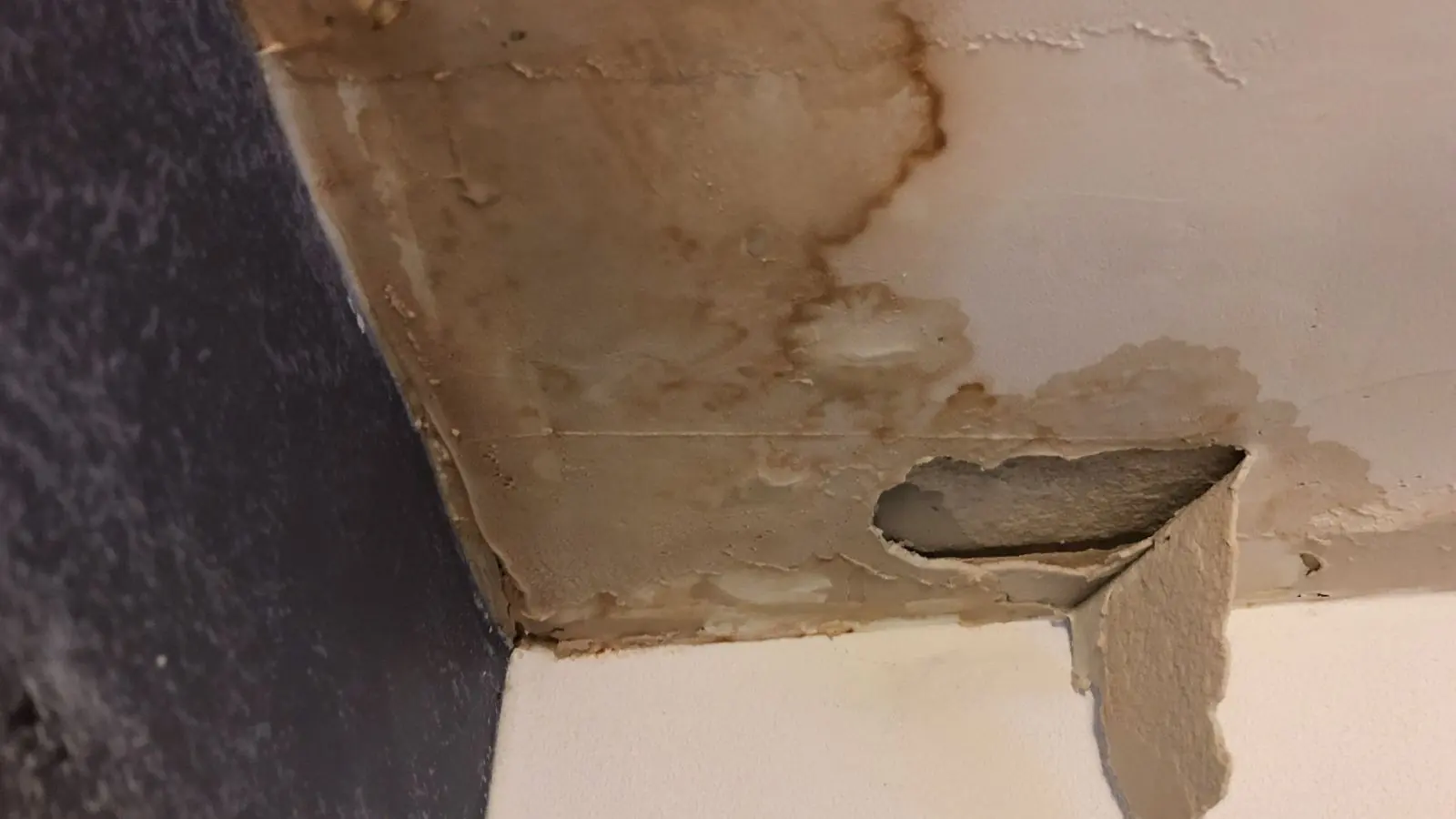
Roof leak water damage in Evergreen, CO is the interior harm that follows when snowmelt, rain or ice backs up under the roofing and runs into the attic, the insulation and the ceiling below. The roof itself is a roofer's job. Our part is the inside: pulling out what is soaked, drying the framing and finishing the surfaces once readings are normal. Calls come in at every hour, so dispatch runs 24/7.
If water is dripping from a light fixture or a ceiling is bulging, read the safety steps below first, then call.
How roof water gets into Evergreen homes
Evergreen sits at about 7,160 feet and NOAA normals, as summarized for the Evergreen station, show roughly 80 inches of snow in an average year. That snow sits on roofs for weeks, melts on sunny afternoons and refreezes at night. Any weak point in the roofing gets a slow, repeated soaking instead of one rainstorm.
Four entry points show up again and again:
- Ice dams. Heat escaping from the living space melts snow on the roof, the meltwater runs to the cold eave and refreezes, and a ridge of ice builds up. A state emergency-management guide from Michigan explains that water pooling behind that ridge can back up under the shingles and reach the attic.
- Failed flashing. The metal around chimneys, skylights, vent pipes and wall-to-roof joints lets water in once the sealant cracks or the metal lifts.
- Valleys. Where two roof planes meet, melt from both slopes funnels into one channel, and a worn valley sends that water under the shingles.
- Worn or lifted shingles. Wind and freeze cycles loosen them, and meltwater finds the gaps.
What you see and what it means
The ceiling is rarely where the trouble starts. Water usually travels along rafters and the top of a wall before it surfaces somewhere else, so a stain can sit several feet from the actual opening.
| What you notice | What it usually means | What the crew checks |
|---|---|---|
| Brown ring on the ceiling | Water has soaked the drywall from above | Moisture meter readings and thermal imaging across the ceiling |
| Bulging or sagging drywall | Water pooled on top of the board | Whether the ceiling is safe to open and drain |
| Damp, matted attic insulation | Insulation is holding water against the ceiling | How much insulation must come out |
| Drips at a light fixture | Water is inside the ceiling cavity and near wiring | Power status and the extent of the wet cavity |
| Peeling paint near an exterior wall | Meltwater ran down the wall framing | Moisture inside the wall cavity |
Wet insulation is the quiet problem. It loses its insulating value, it holds moisture against the ceiling for days and it often needs to be removed so the framing underneath can dry.
Roof leak safety
- Keep people out from under a bulging ceiling. Drywall full of water can drop without warning.
- If water is coming through a light fixture or an outlet, turn off that circuit at the panel only if the panel is dry and you can reach it safely. Otherwise call the utility or 911.
- Put buckets under drips and cover floors and furniture with plastic. Leave a bulge alone unless dispatch walks you through it.
- Do not climb onto a snowy or icy roof. Call a roofer and let them judge whether it is safe.
- Move furniture and electronics out of the room, and take photos before you touch anything.
How the interior work runs
The crew starts at the ceiling and works outward, because roof water travels farther than the stain suggests.
- Moisture mapping. Moisture meters and a thermal imaging camera show how far the water spread across the ceiling, down walls and into the attic floor.
- Controlled removal. Soaked drywall and insulation are cut out and bagged. Drywall that is only damp may be dried in place.
- Drying setup. Air movers and LGR dehumidifiers go in, and for cavities that cannot be reached from the room, ducted air is pushed into the space through small openings. Crews log readings at each visit.
- Handoff. When framing reads dry, the finish work can begin. See water damage repair for the rebuild side, and structural drying for how the drying goal is set and confirmed.
Roof water is usually clean when it falls, but it passes through attic dust, old insulation and framing, and that mix can turn a damp ceiling into a mold concern within a couple of days. Industry practice follows the published ANSI/IICRC S500 standard for water damage restoration, and it is fair to ask any company whether its crews work to it.
The roofer and the restoration crew do different jobs
A roofer finds the opening, replaces flashing, repairs valleys and shingles, and often deals with the ice itself. We do not do roof repair. The two jobs overlap in time, so tell the roofer that water has reached the interior, and tell dispatch that a roofer is involved.
Ask Building Safety at Jefferson County whether your roofing work needs a permit. The county's online permit system lists re-roof work among its permit types, and the rules for your address are theirs to answer, not ours.
What higher elevations mean for roof leaks
Conifer sits higher than Evergreen, at roughly 8,000 feet plus, so snow and freeze arrive harder and stay longer. A homeowner there can have snow loading a roof weeks after Evergreen's has melted off, and each warm afternoon feeds another round of meltwater under the roofing. If you are in Conifer or Indian Hills, mention how long snow has been on the roof when you call, since a long soak changes what has to come out.
What changes the cost
No one can name a fair price without seeing the ceiling and the attic. The factors are the same on every roof leak job:
- How long the water ran before anyone noticed.
- How much insulation and drywall is wet and must be removed.
- Whether framing and sheathing are wet, and how many drying days they need.
- Ceiling height and attic access, which affect how equipment gets set up.
- The finish scope: texture, paint, insulation replacement and any trim.
Want your real number? Call (303) 952-8295 and describe the leak.
Roof leaks and your insurance
Sudden and accidental water damage, such as a storm tearing off shingles, is often covered. A leak that dripped for a long time because of a worn roof is often treated as maintenance, and policies often exclude it.
Wear and tear on the roof itself is commonly excluded too, while the interior damage is sometimes handled differently. Check your policy, ask your insurer what it needs, and keep photos of the roof, the ceiling and your drying records. A roof claim has its own terms, and the decision belongs to your insurer.
Mistakes that make roof leaks worse
- Waiting to see whether the stain grows. Wet insulation can keep a ceiling soaked for days after the sky clears.
- Chipping ice off the roof with a hammer or shovel. This tends to break shingles and open new leaks.
- Painting over the stain. Paint seals moisture in and hides the evidence your insurer may ask for.
- Closing up the ceiling before the cavity is dry.
The best prevention happens in the attic. The Michigan guide notes that warm air leaking from the living space is usually the cause of ice dams, and it points to attic insulation and ventilation that keeps the roof deck cold. A roofer or insulation contractor can assess that for your home.
Water coming through the ceiling?
Dispatch answers 24/7 and explains the first steps for the rooms below.
Frequently asked questions
Is emergency roof leak water damage service available in Evergreen, CO?
Yes. The line is answered 24/7, including nights, weekends and storm days. Same-day response is offered when available, and the dispatcher tells you what is realistic for your address. A roofer handles the roof, and the restoration crew handles the wet ceiling, insulation and framing.
Do you repair the roof?
No. A roofer repairs the roof. The restoration crew dries and restores the inside of the house, and the two trades can work in the same week.
Can I leave a bulging ceiling alone until the weekend?
It is safer not to. A bulge means water is trapped above the drywall, and the board can fail suddenly. Keep people out from under it and call.
Does wet attic insulation always have to come out?
Often, yes. Matted insulation holds water against the ceiling and dries slowly. Readings from a moisture meter and a thermal imaging camera show which sections can stay.
Why is my ceiling stained far from the leak?
Water follows rafters and drywall seams before it drips. The stain marks where it surfaced, not where it entered, so the crew maps moisture instead of guessing.