
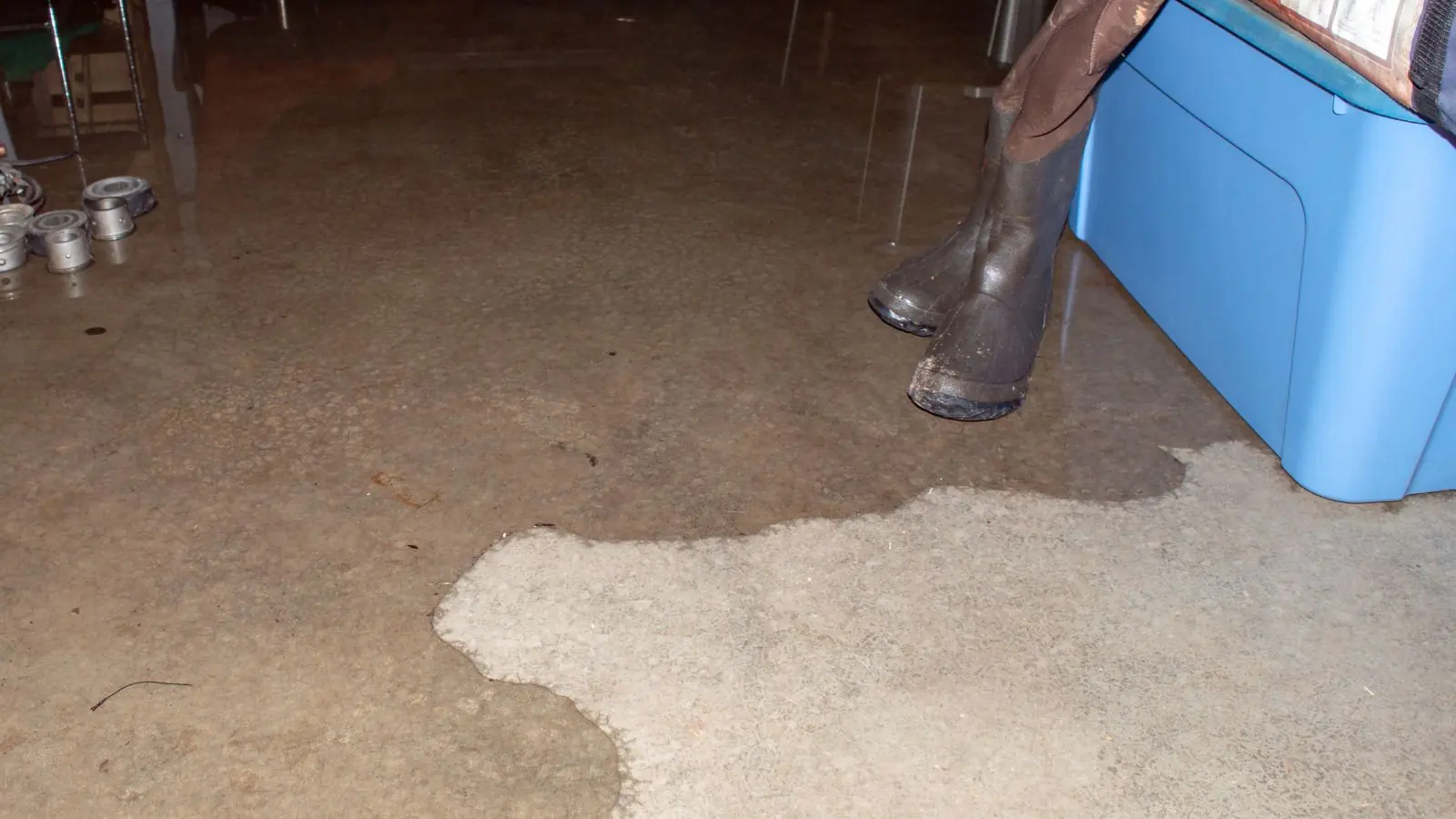
Basement water damage cleanup in Evergreen, CO covers water that enters below grade: seepage through foundation walls, overflowing window wells, a failed sump pump or groundwater pushing up through the slab. It differs from a burst pipe because the water often arrives slowly and from outside, so the first sign may be a musty smell or a dark line on the drywall. The dispatch line runs 24/7 for the times it does not wait.
At roughly 7,160 feet, with about 80 inches of snow a year, Evergreen sends a lot of meltwater toward foundations each spring. That water has to go somewhere, and a basement below it is often where it ends up.
How water gets into a mountain basement
Most foundation water follows a few predictable paths, and knowing which one applies decides the fix.
- Snowmelt and saturated soil. Frozen ground sheds meltwater toward the house, and wet soil presses water through cracks and the joint where the wall meets the slab.
- Window wells. A well that fills with snow or debris and has no drain lets water run straight over the sill.
- Sump pump failure. A pump that loses power during a storm, or whose float sticks, lets the pit overflow onto the floor.
- Grade and downspouts. Soil that slopes toward the house and downspouts that empty at the wall load the foundation with water.
- Rising groundwater. Water pushes up through the slab seam or a floor drain after prolonged wet weather.
None of these needs a pipe to break. That is why many basement losses are found when someone steps on wet carpet, not when something dramatic happens.
Finished versus unfinished basements
An unfinished basement with a bare slab and masonry walls is the easier loss. Water can be extracted, the concrete washed and dried, and stored items moved or discarded. The slab and block take time to dry, but nothing needs to be rebuilt.
A finished basement is different because the water hides inside the build-up. Carpet, pad, baseboards and the lower stretch of drywall wick moisture upward, and the insulation behind the drywall can stay wet long after the surface looks fine. The crew checks the wall with moisture meters and a thermal imaging camera before deciding how much to cut out.
What you see and what it tells you
| What you see | What it may mean | What to do |
|---|---|---|
| Dark band along the base of the wall | Wicking from a wet slab or seepage | Mark the line and photograph it |
| Efflorescence, a white powder on masonry | Moisture passing through the wall over time | Look for the source outside |
| Carpet squishy near an exterior wall | Water coming through the wall base | Lift an edge to check the pad |
| Standing water near the sump | Pump failed or is overwhelmed | Check power and the discharge line |
| Musty smell with no visible water | Moisture inside walls or under flooring | Ask for moisture mapping |
A smell without visible water is worth taking seriously. It usually means damp insulation, pad or framing, and that is the stage where a clean-looking room can turn into a mold remediation call if nobody checks inside the wall.
Basement water safety
- Stay out of a basement with standing water if the furnace, water heater or electrical panel is in the water or close to it. Call the utility or 911 for a wet panel.
- Do not walk through water to unplug things. Electricity and a wet floor are a serious combination.
- Treat the water as contaminated if it came from a floor drain or a toilet. Sewage backups follow a separate process on our sewage backup page.
- Move boxes, furniture and electronics off wet floors and onto blocks or upstairs rooms.
- Do not open a wall cavity yourself. The crew needs to see how wet it is before material is removed.
How the cleanup and drying run
The order matters, because drying works only after the standing water and the unsalvageable materials are gone.
- Extraction. Pumps and extraction units pull standing water off the slab and out of the carpet.
- Selective removal. Saturated pad, carpet that cannot be dried and soft drywall are cut out and bagged.
- Moisture mapping. Meters and a thermal camera show where water is still trapped in walls, behind baseboards and under flooring.
- Drying. Air movers push air across surfaces while LGR dehumidifiers pull moisture from the air. Cold slabs dry slowly, so the process runs for several days.
- Verification. Readings are taken each visit and compared to a dry reference from unaffected parts of the home.
ANSI/IICRC S500 is the published industry standard for this work. Ask any company whether its crews work to it and how they log readings. Clean groundwater can slide toward Category 2 or 3 if it picked up soil, fertilizer or sewage, so the crew checks the source before choosing how aggressive to be.
Why drying early beats waiting
EPA flood guidance says mold can grow on wood, drywall, carpet and furniture that stay wet more than 24 hours. A basement is a cool, closed room, so air does not move much and a damp wall dries slowly. Waiting for it to go away is the choice that turns a wet carpet into a wet carpet plus wet framing.
Time also decides what can be saved. Carpet and pad that are extracted quickly can sometimes be kept if the water was clean. After several days, the same carpet is usually a removal job. Quick action keeps the scope smaller, even though the cost still depends on the size of the loss.
Local history worth knowing
Basement flooding is not a new problem in this part of Jefferson County. The Mile High Flood District records that on May 6, 1973, Tucker Gulch overtopped in Golden and Kenneys Run flooded basements along Ford and Jackson Streets. If your house sits below a gulch or at the bottom of a slope, water follows the same logic.
More recently, a June 2026 flash flood sent Bear Creek rising fast, according to the Colorado Sun and CBS Colorado. Troublesome Gulch water entered homes and mud reached downtown Evergreen. Large events like that fall under flood damage restoration, while this page deals with the smaller seepage that can return with each melt.
To see how your lot is mapped, check the FEMA flood map for your address on the agency's Flood Map Service Center. The Golden and Morrison pages describe the neighboring creek communities.
What changes the cost
Every basement is different, so a number only makes sense after a crew has seen it. The main factors are:
- The water category and how long the water sat.
- The size of the area and whether it is finished or unfinished.
- How much carpet, pad, drywall and insulation must be removed.
- The number of drying days and the amount of equipment.
- Whether the source, such as a failed pump, still needs repair.
Want your real number? Describe the basement to dispatch, and the scope is explained before work starts.
Insurance and basement water
Sudden and accidental water, such as a supply line failing in the basement, is often covered. Seepage through foundation walls, groundwater and surface flooding are often excluded, and sump pump overflow usually needs a specific endorsement. Check your policy, ask your insurer what it covers, and photograph the damage before cleanup begins. No one here can promise what a carrier will approve.
Prevention before the next melt
Clear window wells and make sure their drains are open before the first heavy snow. Point downspouts away from the foundation, and check that soil slopes away from the wall. Test the sump pump by lifting the float and confirming it discharges outside, and consider a battery backup if storms often knock out power. These steps do not make a basement waterproof, but they reduce the load on it.
Water in the basement?
Call the 24/7 line and describe where it is coming from.
Frequently asked questions
Is emergency basement water damage cleanup available in Evergreen, CO?
Yes. Dispatch picks up around the clock, and same-day response is offered when available. The dispatcher asks whether water is still entering, whether the furnace or panel is near it and what the floor is made of, then explains what to do first.
Can a wet basement be fixed without tearing out drywall?
Sometimes. If the water was clean and only the lower wall is wet, drying behind the drywall may work. If moisture meters show saturated insulation, or if the wall has been wet for days, removal of the lower section is usually the safer route.
Why does my basement seep every spring?
Snowmelt saturates the soil, and water presses against the foundation. Look at downspouts, grade, window wells and cracks, and have the source fixed after the cleanup. Drying alone does not stop the next melt.
How is this different from flood damage restoration?
This page covers seepage, sump failure and groundwater in a basement. Creek flooding and storm surges involve more contamination and larger scopes. Both use drying standards, but the process differs.
Should I run a dehumidifier myself?
A household unit helps a small damp spot. It cannot confirm that walls and framing are dry, so for anything wider than a patch of floor, ask for moisture mapping before you decide.
What if the water is coming from the crawl space or a pipe?
A pipe leak follows a different path from seepage, and our emergency water removal page covers the first hours. Crawl spaces dry differently, so they have their own crawl space water damage page.