
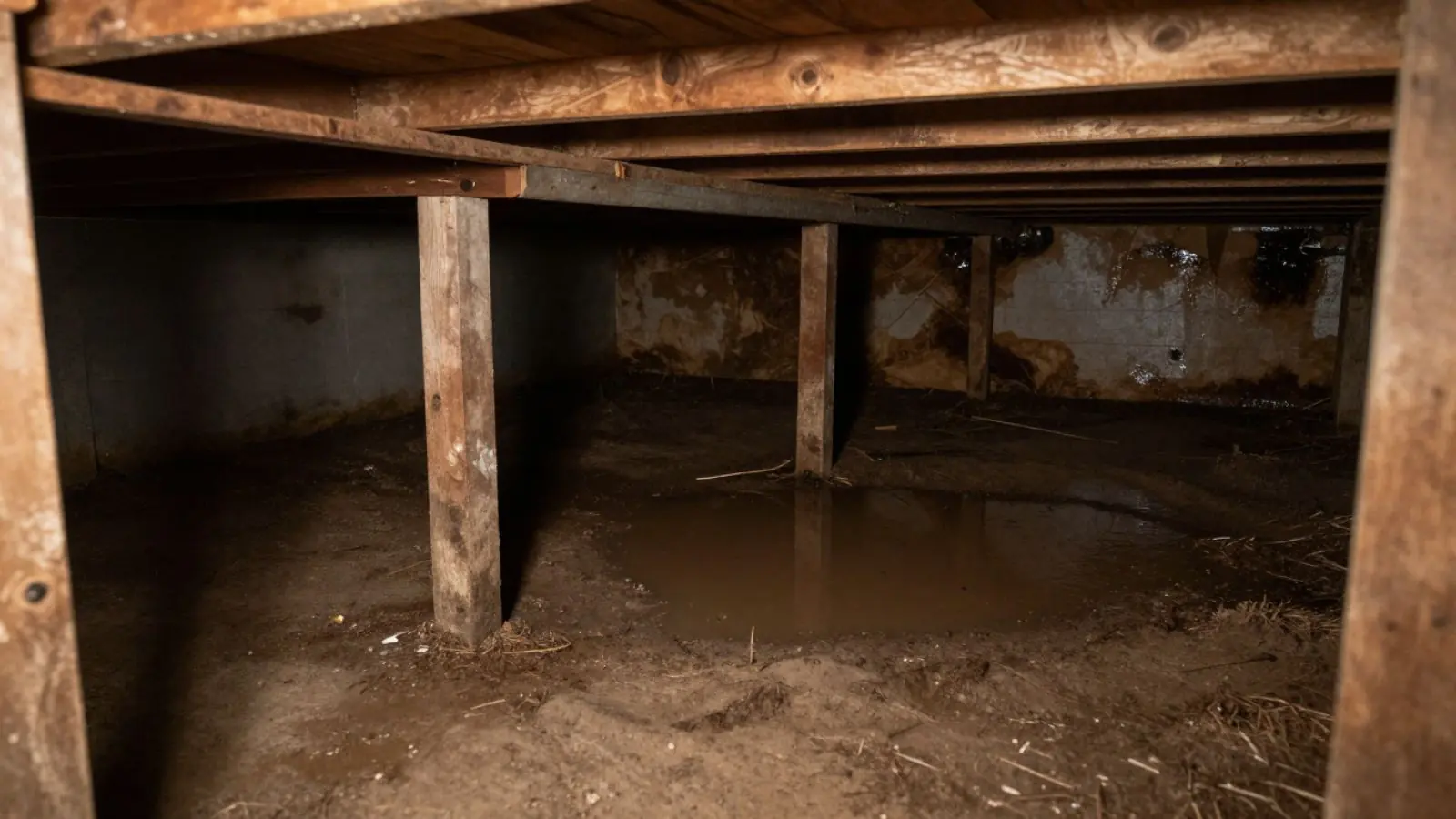
Crawl space water damage in Evergreen, CO is water standing or soaking in the shallow space under a floor: wet insulation, a damp or muddy soil surface, sagging pipes and wet floor joists. It usually starts with a failed drain, a leaking supply line, a clogged window well or meltwater running toward the foundation. The dispatch line is open 24/7, because a pump failure or a pipe break does not wait for a business day.
If you can hear running water under the house, shut off the main valve first, then read the safety steps below.
How crawl spaces differ from basements in foothill homes
Foundation types vary from house to house in the foothills. Some homes have a full basement, some have a crawl space and some have both under different wings. The page on basement water damage covers rooms where people can stand and walk, with finished walls, flooring and furniture at risk.
A crawl space has few finished surfaces, but it holds the framing, ducts, plumbing and insulation the whole house depends on.
That difference changes the work. In a basement, the crew carries equipment in and out. In a crawl space, the crew often has to work lying down through a small hatch, so equipment has to be small, light and ducted from outside. The goal is the same as any wet area: remove water, find every wet material and dry the structure to its normal moisture level.
How water gets under a foothill home
Evergreen averages about 18.6 inches of precipitation a year, with roughly 80 inches of snow on top of that, per NOAA normals as summarized for the Evergreen station. Snow that piles against a foundation melts into the soil during spring thaws, and ground that is saturated has nowhere to send the water except toward low spots, including the crawl space.
The usual routes in:
- Meltwater and runoff. Soil that slopes toward the foundation, buried drains and window wells all carry snowmelt to the walls.
- Failed sump or drain. A pump that quits, a discharge line that freezes or a drain that clogs lets water rise.
- Plumbing leaks. Supply lines, drain lines and water heater connections under the floor drip onto insulation and soil. Sagging pipes can pull apart at joints.
- Condensation. Moist soil gives off vapor that condenses on cold ducts and joists.
The U.S. Department of Energy's building guidance on crawl space floors says moisture can reach a crawl space from the soil below, as liquid or as vapor condensing on floor joists, and that moisture there can promote mold and rot along the joists. That is why a small leak under a floor deserves more attention than its size suggests.
What you see and what it means
The first sign is often indoors. Cold floors, a musty smell and cupped hardwood point downward long before anyone opens the hatch.
| What you notice | What it often means | What the crew checks |
|---|---|---|
| Musty smell in the rooms above | Damp soil or wet insulation | Moisture readings in joists and subfloor |
| Floors that feel cold or bouncy | Wet subfloor or sagging insulation | Subfloor moisture and structural condition |
| Sagging insulation | Water has soaked it or it is pulling loose | How much insulation must come out |
| Standing water on the ground | Drain, sump or leak failure | Source, depth and electrical hazards |
| Condensation on ducts or pipes | High humidity and bare soil | Vapor barrier condition |
Crawl space safety
- Do not crawl into standing water. Wet wiring, a water heater or a furnace may be nearby.
- Shut off power to the crawl space only if the panel is dry and you can reach it safely. If anything is sparking or buzzing, stay out and call your utility or 911.
- Shut the main water valve if you hear running water under the floor.
- Tight, wet spaces can hide animals, sharp debris and old insulation, so wear gloves, boots and a mask if you must look, and leave removal to the crew.
- If the water came from a sewer or septic line, stay out and say so on the call.
How the crew works in a tight space
Crawl space jobs take specific gear, and the way the crew sets up matters as much as the equipment itself.
- Extraction. Small submersible pumps and compact extraction units remove water through the access hatch. A slow, steady pump-out beats a rushed one, because saturated soil around a foundation can shift if the water is drawn down too fast.
- Moisture mapping. A moisture meter checks joists and subfloor, and a thermal imaging camera shows wet insulation and cold, wet areas from the access point.
- Removal. Soaked fiberglass batts and torn vapor barrier come out and are bagged. Insulation that is wet is heavy, and a sagging batt can hold water against the subfloor for a long time.
- Drying. Air movers are set in the space, and ducted air moves through hoses from equipment placed outside or near the hatch. LGR dehumidifiers then pull moisture out of the air. The crew logs readings on each visit, and the drying goal follows the published ANSI/IICRC S500 standard.
- Handoff. Once the framing is dry, the next step may be structural drying follow-up, a vapor barrier or mold remediation if growth is found.
Vapor barriers and ground moisture
A crawl space with bare soil or a worn plastic sheet keeps feeding moisture upward. The Department of Energy guidance calls for polyethylene at least 6 mil thick over the ground, extended at least 6 inches up walls and piers, with overlapped, sealed seams. It says exposed dirt floors let ground vapor and soil gases in.
EPA moisture guidance for homeowners also says to lay plastic over exposed soil in crawl spaces, and the Department of Energy adds that the sheeting should not interfere with drainage.
We dry the structure, and a plastic barrier is usually installed by a crawl space or general contractor. Ask whoever does it to reinstall barrier after the drying is done, since putting plastic over wet soil traps the moisture.
Water, snow and the Bear Creek basin
The Mile High Flood District lists 24 known floods in the Bear Creek basin since the 1860s, and most were summer thunderstorm floods. After a storm like the one in June 2026, ask whether water reached the area under your floor even if the rooms above stayed dry, since a crawl space is the first place it can collect unseen.
If water crossed the yard into your home, see flood damage restoration, because the water may be contaminated. Homes in Morrison and Idledale sit nearest the creek.
What changes the cost
No honest number comes without a look underneath. The factors:
- Depth and duration of the water, and whether it was clean or contaminated.
- Access size, which affects how much equipment can go in and how long setup takes.
- Wet insulation and vapor barrier to remove and replace.
- Joist, subfloor and duct damage.
- Drying days and equipment count.
- Any follow-up, such as drain or sump repair.
Want your real number? Call (303) 952-8295 and describe the crawl space.
Crawl space leaks and insurance
A burst pipe or sudden failure under the floor is often covered as sudden and accidental water damage. A slow drip, ground seepage or a long-neglected drain is often treated as maintenance and not covered. Water that enters from outside is usually flood and needs separate flood coverage.
Check your policy, ask your insurer what it needs and keep photos from before the crew removes anything. Coverage for water under the floor depends on your policy, so ask before you assume.
Mistakes that make it worse
- Going down in standing water to look.
- Ignoring a musty smell because the floors look fine.
- Laying plastic over wet soil.
- Closing the hatch and hoping.
Water under the floor?
Dispatch answers 24/7 and tells you what to leave alone until a crew arrives.
Frequently asked questions
Is emergency crawl space water damage service available in Evergreen, CO?
Yes. The line is answered 24/7. Same-day response is offered when available, and the dispatcher asks about the hatch, the depth of water and any electrical equipment nearby before sending anyone.
How is a crawl space different from a basement?
Access and equipment. A crawl space is too low to walk in, so crews use small pumps, compact extraction units and ducted air movers. The materials at risk are mostly insulation, joists, ducts and pipes instead of finished rooms.
Does wet insulation have to come out?
Usually. Wet fiberglass holds water against the subfloor and does not dry well in place. Readings show which sections can stay.
Should I run a dehumidifier down there myself?
A household unit will not clear standing water or dry wet joists. Get the water out first and have the framing read before deciding.
Can snowmelt flood a crawl space?
Yes. Meltwater soaks into the soil by the foundation and can find its way through gaps or a failed drain, so check the grading and drains each spring.