
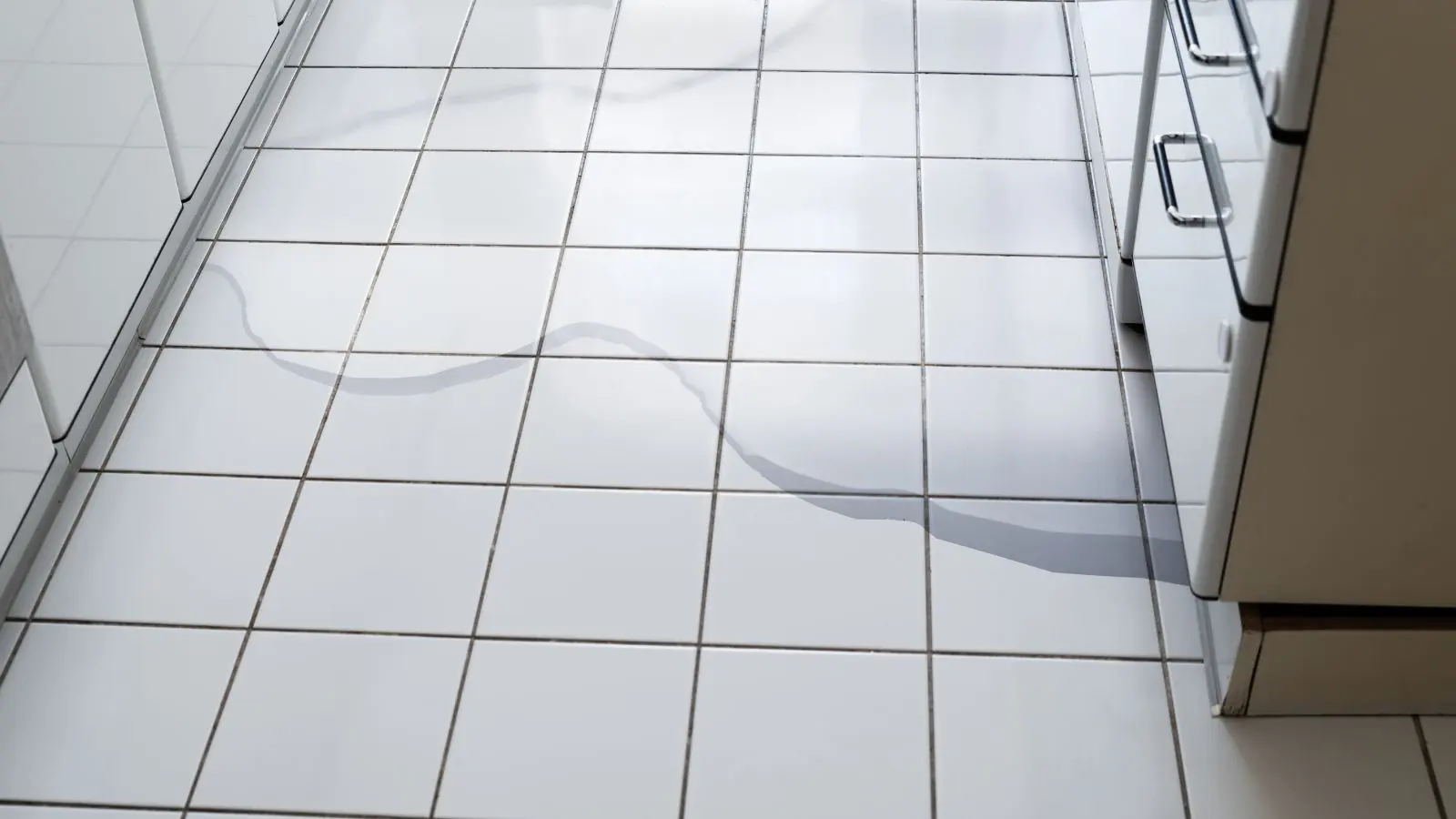
Kitchen water damage restoration in Evergreen, CO focuses on one room and one set of hiding places: the cabinet cavity, the toe-kick, the subfloor and the seams around countertops and backsplashes. A kitchen holds a sink supply, a drain, a dishwasher line, often a refrigerator ice-maker line and a lot of materials that swell when wet. The aim is to dry what can be dried and keep the cabinets and counters in place wherever possible.
Where kitchen water comes from
Most kitchen losses start with a small failure that runs for a while before anyone notices. A supply line under the sink can weep at a fitting, a drain trap can loosen, a dishwasher supply or drain hose can crack, and a fridge line behind the unit can drip into the floor. A sudden burst is easy to spot, and a slow drip is the one that causes the larger repair.
The EPA's WaterSense program says the average household's leaks waste more than 9,300 gallons a year and that about nine percent of homes have leaks of 50 gallons a day or more. Most of those leaks are small, which is exactly why they hide in cabinets. EPA suggests reading your water meter before and after two hours with no water in use, which helps tell whether something is leaking.
Signs of a kitchen leak
| What you see | What it often means | Next step |
|---|---|---|
| Swollen or peeling cabinet base | Water reached the bottom panel or toe-kick | Moisture reading, then open the cavity |
| Soft or dark toe-kick | Water ran along the floor edge | Remove toe-kick, read the subfloor |
| Musty smell under the sink | Slow leak or wet cabinet floor | Empty the cabinet and check lines |
| Cracked or lifted floor near dishwasher | Water under flooring from hose or door seal | Moisture map the floor |
| Gap or stain at countertop seam | Water traveled along the sealant line | Check backsplash and sink rim |
| Wet wall behind the fridge | Ice-maker line or valve leak | Shut off the valve, map the wall |
Look under the sink with a flashlight, touch the back corners of the base cabinet and check the toe-kick for soft spots. A paper towel held on each fitting for a minute will show a slow weep. If you find damp wood, the leak has probably been running for longer than it seems.
What dries and what must be replaced
Cabinets are judged by their material. Solid wood and plywood bases often dry out and recover, while particleboard or MDF swells at the base and rarely returns to its shape. The upper cabinets and the box above the base are often unaffected, and a meter confirms it.
Often the best result is cabinets and countertops left in place, with only the damaged base panel or toe-kick replaced. A crew may remove the toe-kick, drill small access holes in the cabinet floor and push dry air in, so the cabinets do not have to come out. The Colorado Division of Insurance notes that water damage to flooring or cabinets is generally covered under homeowners and renters policies, so ask your insurer about limits and exclusions.
Floors under and around the kitchen
Water flows to the lowest point, and in a kitchen that is often the floor under the sink and dishwasher. Tile can look untouched while the subfloor beneath it is wet, and hardwood in a kitchen cups where it sits against cabinets. Vinyl can trap water underneath and show nothing on the surface.
A moisture meter, a thermal imaging camera and sometimes floor drying mats show where water went. If the subfloor is plywood or OSB, it is dried in place when possible and replaced when it has swollen or delaminated. For more on floors, see the hardwood floor water damage page.
How a kitchen job runs
A kitchen job has a set order:
- Stop the source: shut the valve to the failed line and confirm it holds.
- Extract and photograph: remove standing water and photograph before anything moves.
- Map the moisture: meter the cabinet bases, walls, subfloor and flooring.
- Open selectively: remove toe-kicks, base panels or a strip of drywall behind appliances.
- Dry: set air movers and an LGR dehumidifier, and log readings on each visit.
- Confirm and close: reinstall or replace materials once readings match a dry area of the kitchen.
Kitchens are tight, so equipment placement matters. Air movers blow into the cabinet cavity through the opened toe-kick, and the dehumidifier runs in the kitchen or an adjoining room. Crews that follow the published ANSI/IICRC S500 standard for water damage restoration log these readings as they go.
Kitchen water safety
- Close the shut-off valve under the sink or behind the appliance. If you cannot find it, close the main valve.
- Unplug the dishwasher and refrigerator only if the outlet is dry and you can reach it without standing in water.
- Do not run the dishwasher, disposal or ice maker until the failed line is fixed.
- Turn off the breaker for kitchen circuits only if the panel is dry and reachable.
- Take everything out of the wet cabinet and wipe the surfaces, but leave the cabinet itself in place.
- Keep wet appliances where they are if moving them would drag through standing water.
If your home runs on a private well
Jefferson County Public Health says many homes in parts of the county use private wells, and Colorado does not regulate private well water quality. For a kitchen leak, that means a well system can keep supplying a leaking line, so the pump may need to be shut off too. Close the fixture valve first, then ask your well contractor how to isolate the pump.
Homes served by the Evergreen Metropolitan District are on a different system, which the district describes as about 300 miles of water distribution pipe. If you cannot shut water off at the home, ask the district what to do about your service line.
What affects the cost of kitchen water damage work
No fair number comes before someone sees the kitchen. The factors are:
- Water category, since a dishwasher drain leak is dirtier than a supply line.
- Number of cabinet bases and size of the toe-kick run affected.
- Floor type and whether the subfloor needs replacement.
- Whether countertops must be lifted to dry or to reach the wall.
- Days of drying equipment.
- Whether finish work such as paint and trim has to be matched.
Want your real number? Describe the kitchen to dispatch and ask what a written scope would include.
Insurance, records and permits
Sudden and accidental water damage is often covered, gradual leaks and neglect often are not, and flood damage usually needs separate flood coverage. The Colorado Division of Insurance advises contacting your insurer as soon as possible and getting the company's instructions before making repairs. Keep an inventory of damaged items and receipts, and send them together. What your policy covers in the kitchen is a question for your insurer.
Plumbing work for the failed line is a separate trade from drying and rebuilding. If your repair involves new plumbing, ask Jefferson County Building Safety about permits for your address, and do not assume one is or is not needed.
Nearby towns and kitchens
In Golden, the city provides water and sewer service, and its utilities division responds to water and sewer emergencies around the clock. If your kitchen drain backs up, a crew serving Golden can help you tell a clog in your own line from a larger problem to report to the city. In Morrison, the Town runs its own water and wastewater treatment plants, so ask the Town which office handles your address.
After the cabinet cavity is dry, rebuilding follows the steps on the water damage repair page.
Water under the kitchen sink?
Dispatch answers 24/7 and can explain what to move and what to leave alone.
Frequently asked questions
Is emergency kitchen water damage restoration available in Evergreen, CO?
Yes. The line stays open around the clock, with same-day response when available. Tell the dispatcher which line failed, how long it ran and what is wet, and you get first steps while a crew is lined up.
Can my cabinets be saved?
Often. Plywood and solid wood bases usually dry, and a crew can dry the cavity through the toe-kick without removing the cabinets. Particleboard bases that have swollen are more likely to be replaced.
Do the countertops have to come off?
Not usually. Countertops stay if the water stayed in the base and floor. They may be lifted if water reached the wall behind them or if the cabinets below must be removed.
How do I find a slow leak under the sink?
Empty the cabinet, dry the pipes and fittings and press a paper towel to each joint for a minute. Check the shut-off valves and the dishwasher hose, and watch the cabinet floor for new spots.
How is this different from an appliance leak?
An appliance leak focuses on the failed appliance and where it sits in the home. Kitchen restoration focuses on the room, the cabinet cavity and the floor beneath it, whatever line failed.
Should I tear out wet cabinet bases myself?
Hold off until the damage is photographed and read with a meter. Cabinets that look bad may dry and recover, and pulling them out first may mean extra repair.